
How to Say Thank You in Chinese
Xièxie, the x sound and the quiet second syllable
谢谢 (xièxie) is the everyday way to say thank you in Mandarin. English speakers usually trip over two parts of it: the x at the start and the tone of the second syllable. For a closer look at this one word, see our guide to xie xie pronunciation.
Tap ▶ to hear the 谢谢 already in the box, or 🐢 for a slower version. Then tap the microphone, say it, and tap again to stop. The widget shows how each syllable and tone came out. Any phrase from this page works too, typed in characters or in pinyin with tone numbers.
Ways to say thank you in Chinese
- 谢谢 (xièxie) means thanks and works almost everywhere.
- 谢谢你 (xièxie nǐ) or 谢谢您 (xièxie nín) is a bit warmer. Use 您 to be polite.
- 多谢 (duō xiè), “many thanks,” is casual and friendly.
- 非常感谢 (fēicháng gǎnxiè), “thank you very much,” fits emails, speeches and big favors.
- 太感谢了 (tài gǎnxiè le) is a warm “thanks so much.”
- 辛苦了 (xīnkǔ le), “thanks for your hard work,” is for someone who just did a job for you, like a coworker or a delivery driver.

How to answer thank you
These are the replies you’ll hear most:
- 不客气 (bú kèqi): you’re welcome.
- 不用谢 (bú yòng xiè): no need to thank me.
- 没事 (méi shì): no problem. Casual, and what you’ll hear most between friends.
In the dictionary, 不 is bù, but before a fourth tone it changes to a rising tone. That’s why the first two replies start with bú.
How to pronounce xièxie, compared with English
- X is like the sh in “she,” but the tip of your tongue rests behind your lower front teeth and your lips stay spread, almost a smile. Say “she,” then slide your tongue tip down until it presses against the back of your lower front teeth. Keep it there and hiss.
- Ie is like the “ye” in “yes.” Don’t let it slide into “yay.”
- Xiè, the first syllable, has the fourth tone. Start high and drop fast, the way you’d say a firm “yes.”
- Xie, the second syllable, has the neutral tone: short, light and a little lower. Don’t repeat the full fall.
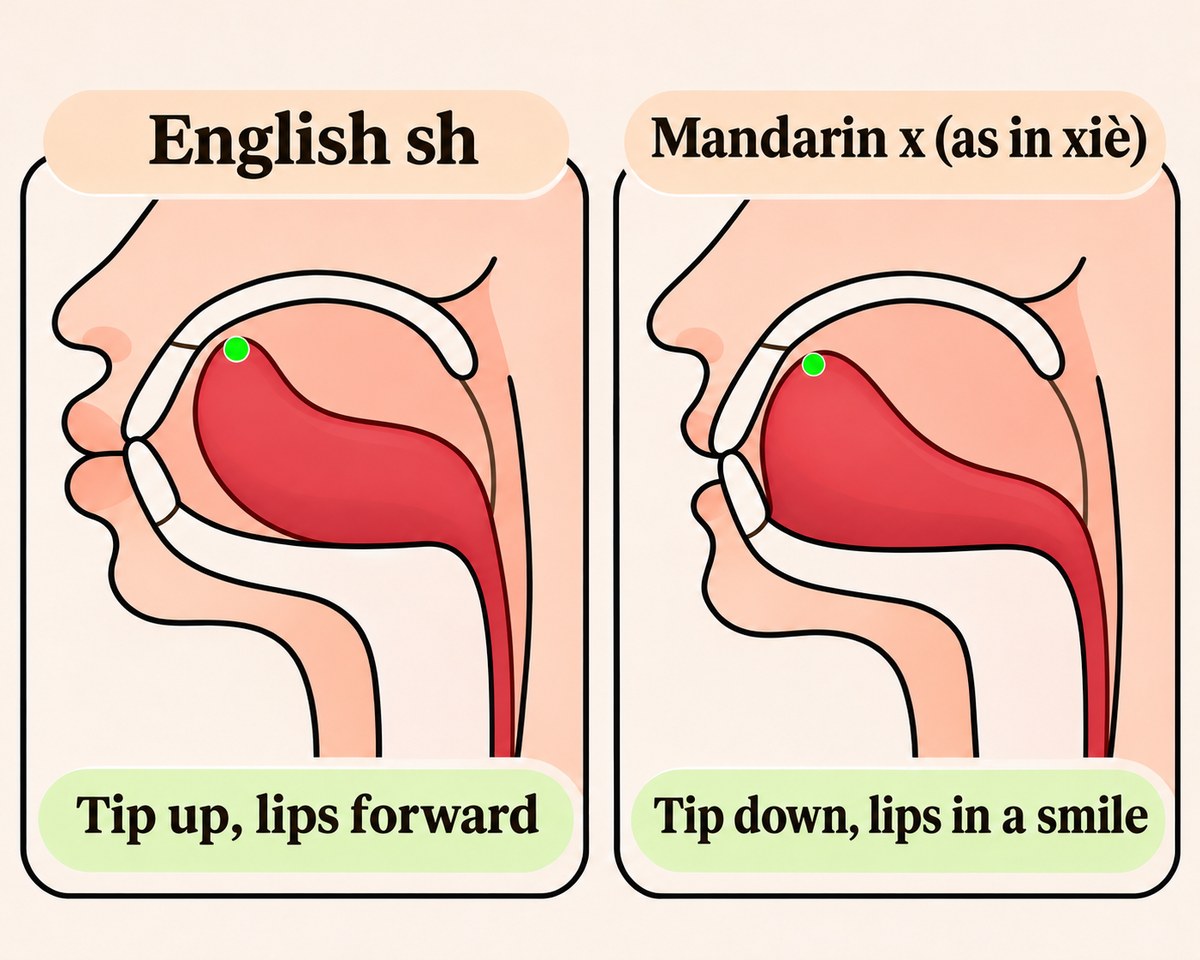
Pinyin shows the neutral tone by leaving the second syllable without a tone mark: xièxie. The x is one of nine Mandarin sounds that English speakers mix up, and this guide to zh, ch and sh shows where it sits among them. For more practice with x, the xu pronunciation guide has a chart of common words you can say into the mic.
The sounds of bú kèqi, compared with English
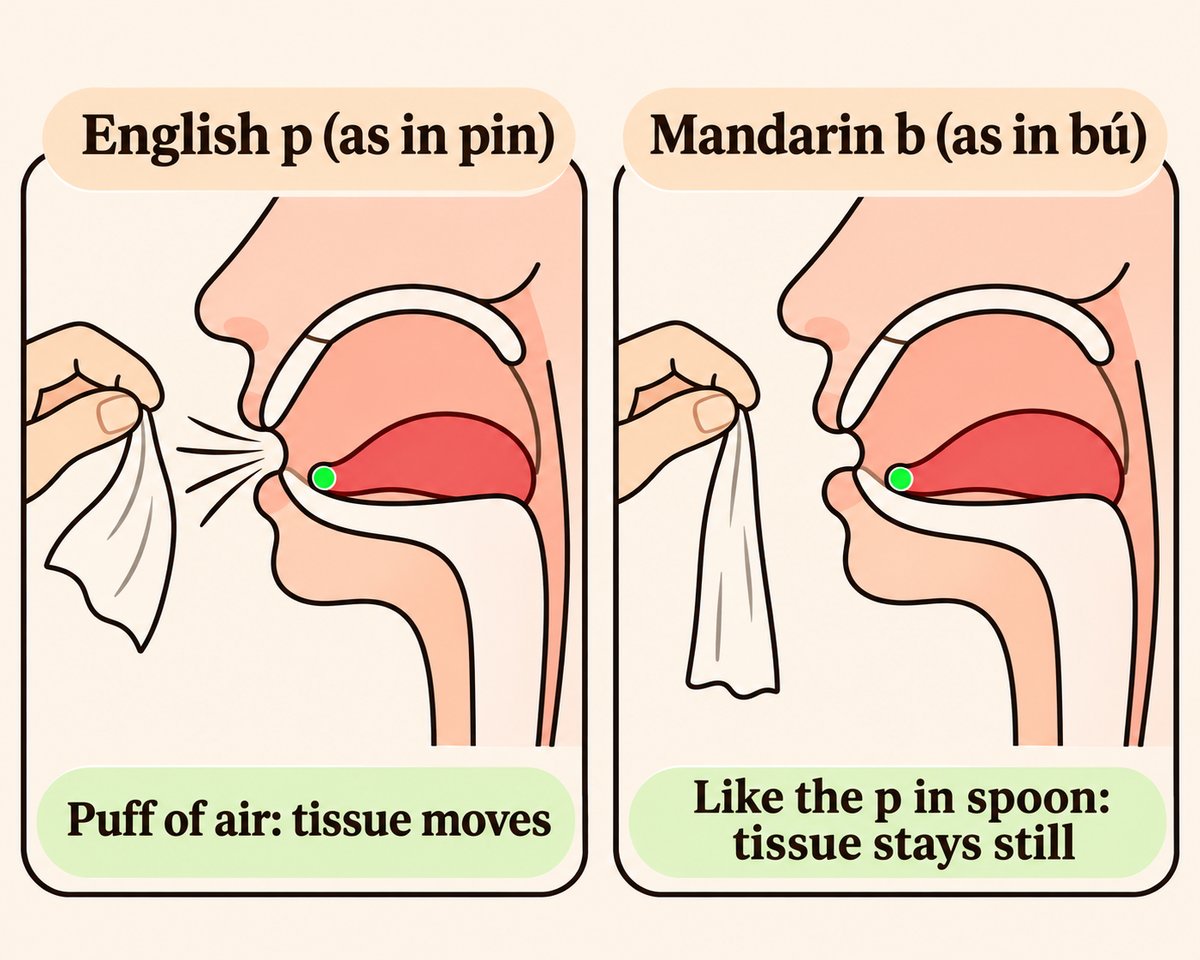
- B is like the p in “spoon,” with no puff of air. Hold a tissue in front of your lips: it shouldn’t move.
- E in kè is like the “u” in “huh,” not the “e” in “hey.”
- Q is like the ch in “cheese,” puff of air and all, but the tip of your tongue rests behind your lower front teeth, lips spread, the same spot as x.
Common mistakes English speakers make
- An English sh pushes the lips forward, which turns 谢谢 into “shieh-shieh.” For x, keep the lips spread.
- Mandarin x has no k sound in it, unlike the x in “taxi.”
- Stressing both syllables, XIÈ XIÈ, can sound abrupt, even annoyed.
- Chinese speakers thank close family and friends less often than English speakers do, so constant 谢谢 at home can sound distant.
Next, learn how to say hello, goodbye and my name is in Chinese.
Check yourself
Try a longer thank-you
Replace 谢谢 with 谢谢你 and record it. Then try 非常感谢. In gǎn, a third tone before a fourth tone stays low and doesn’t rise at the end.
If the widget shows a different tone than you meant, tap 🐢 to hear the phrase slowly. Say it slowly once yourself, then record it again at normal speed.