
Xu Pronunciation
A Teacher Named Sue
I decided to write this article after remembering a story about my Chinese teacher at Beijing Language and Culture University, Teacher Xu (徐老师).

Beijing Language and Culture University, 2016. The teacher in the photo is not the teacher this article is about.
I’ll never forget how heavily Teacher Xu sighed when my classmates and I tried to pronounce her last name correctly. We called her all sorts of things. I remember versions like “Ksu,” “Zu,” and “Hu.”
After spending the first few days trying in vain to respond only when we pronounced her last name correctly, she gave up and asked us to just call her “Teacher Sue” from then on.
To give my classmates and myself some credit, after just 2 to 3 weeks, we learned to say her name correctly every time. But this story has stayed with me ever since.
Two Last Names Spelled Xu
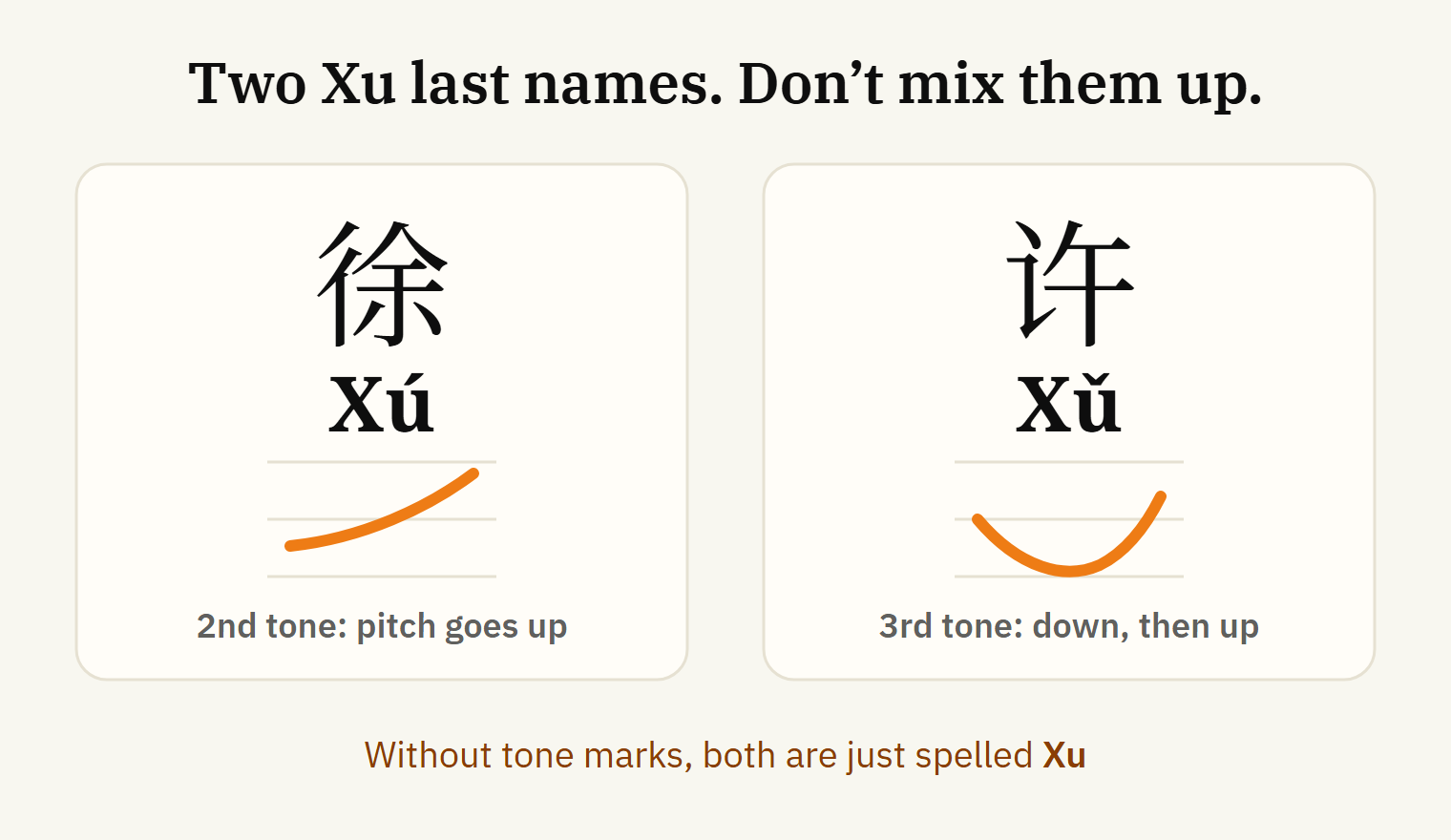
An interesting fact: China has two common last names with the sound Xu. Both are very common.
- Xu with the second tone is the 11th most common last name in all of China. This was my teacher’s last name. It means “slowly” or “calmly” (a great last name for our patient Teacher Xu).
- Xu with the third tone is the 26th most common last name. It means “to permit” or “to allow.”
So if you meet a Chinese person whose last name is Xu, be sure to ask which Xu they use in their last name.
Three Steps to Pronouncing the Syllable Xu Correctly
Let’s work through how to pronounce the sound xu correctly, step by step. We’ll break it down into the sound x, the sound u, and how to say them together as a syllable. Below, we’ll work out how to say the sound correctly, and I’ll give you a free interactive tool to practice xu in the most common Chinese words.
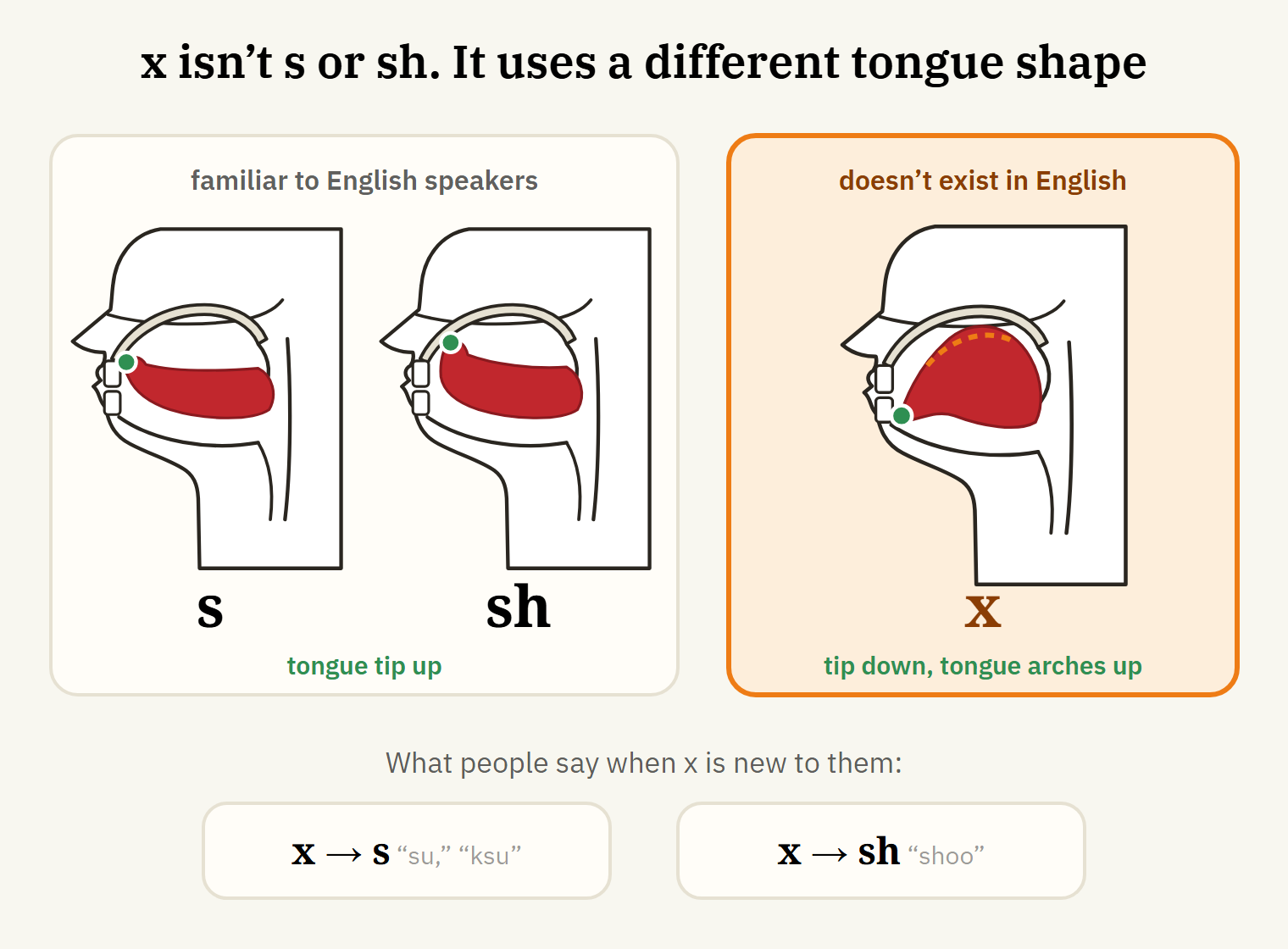
- X: The tricky part is that in Russian or English, we’re used to mostly working with the tip of the tongue. But to pronounce the sound x, the tongue takes an unfamiliar position: it forms a sort of “hump” and presses against the roof of the mouth. English-speaking students often pronounce x as “ks” (as in the word taxi).
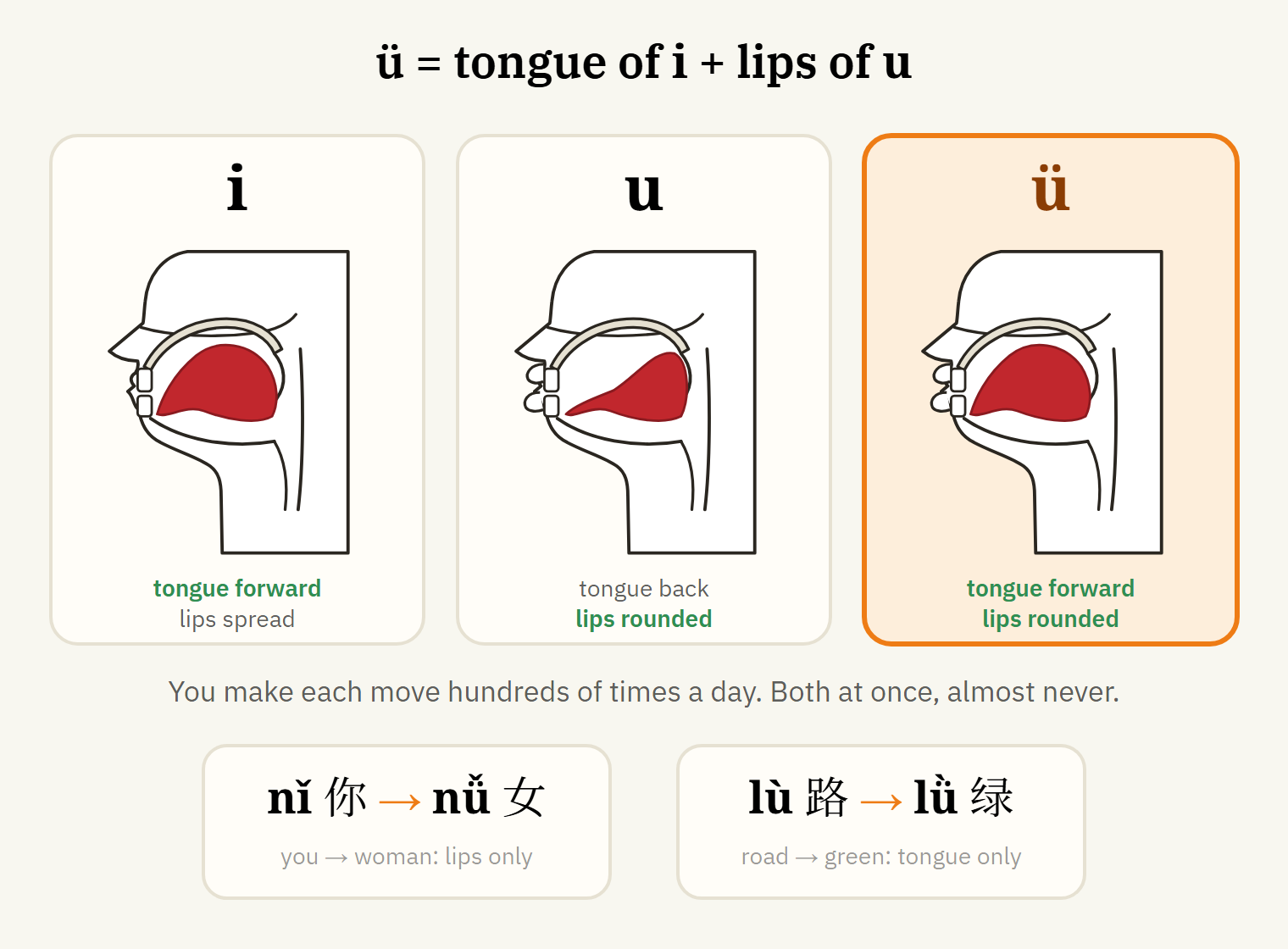
- U: The tricky part here is that the lips do most of the work, rather than the tongue.
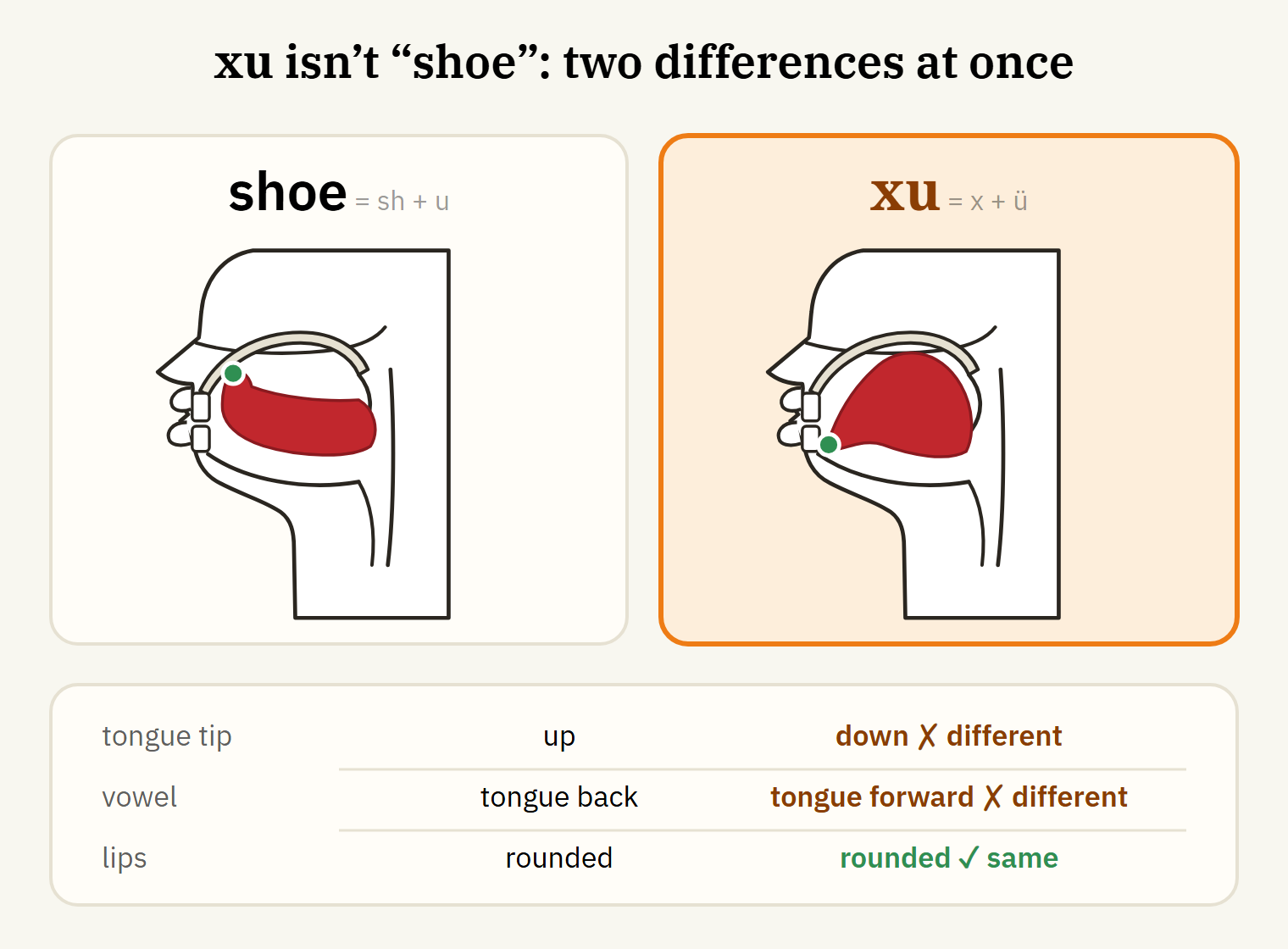
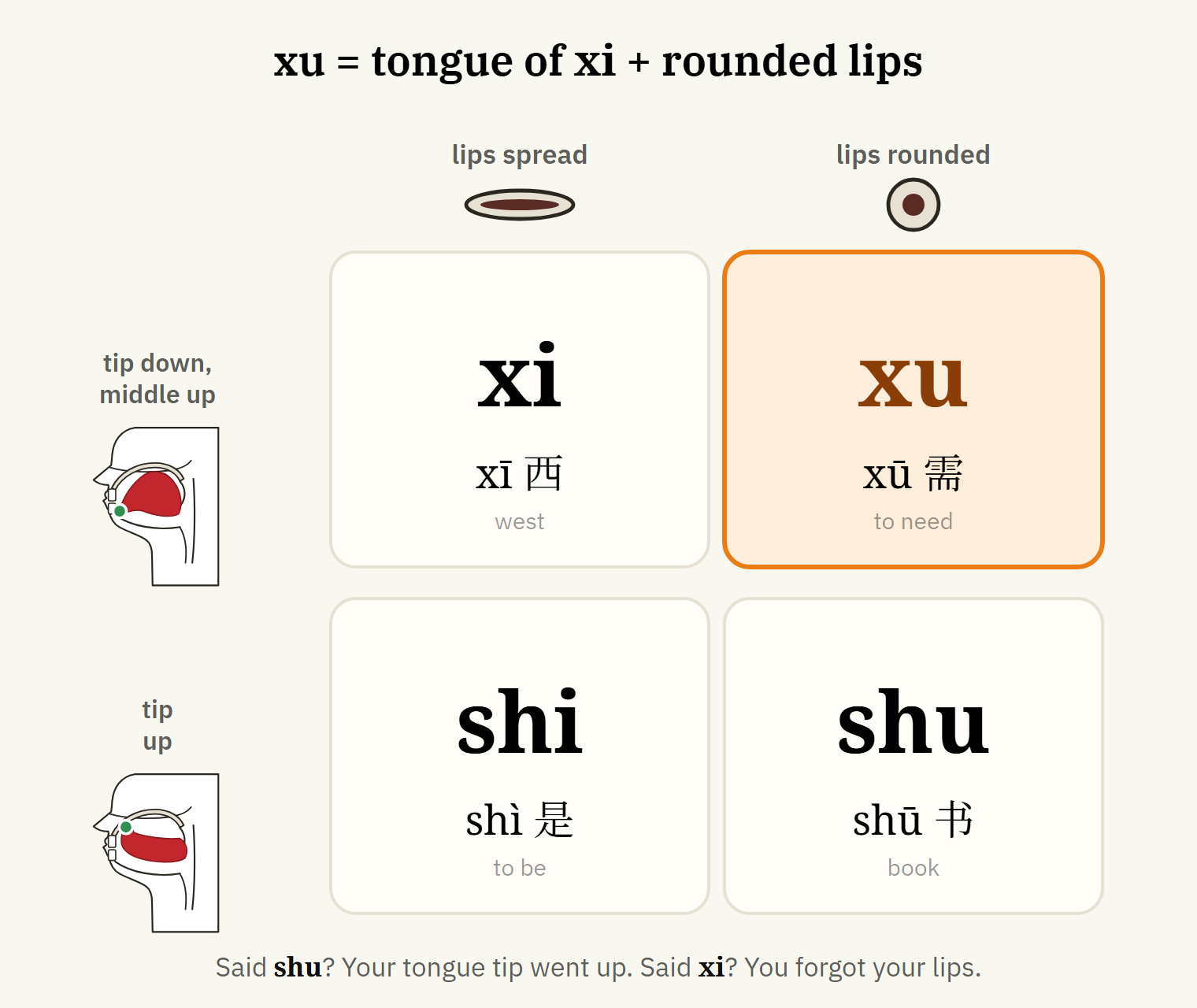
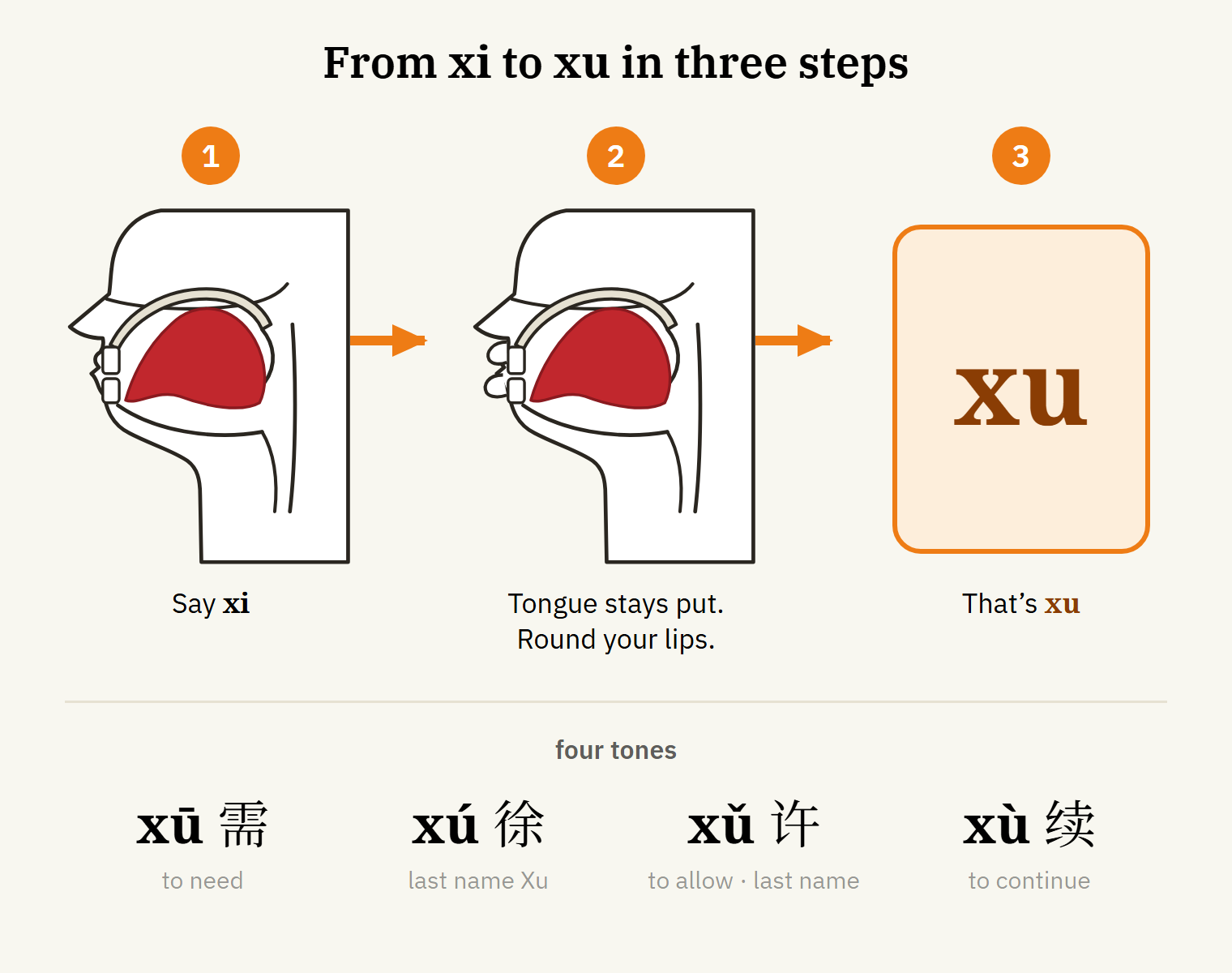
- Now we need to put the sound x and the sound u together. Here, it’s important to avoid a common mistake and resist the temptation to pronounce xu like the familiar word shoe. In Mandarin pronunciation, the tongue stays by the lower teeth and forms a hump, while in English pronunciation, the tip of the tongue does the work.
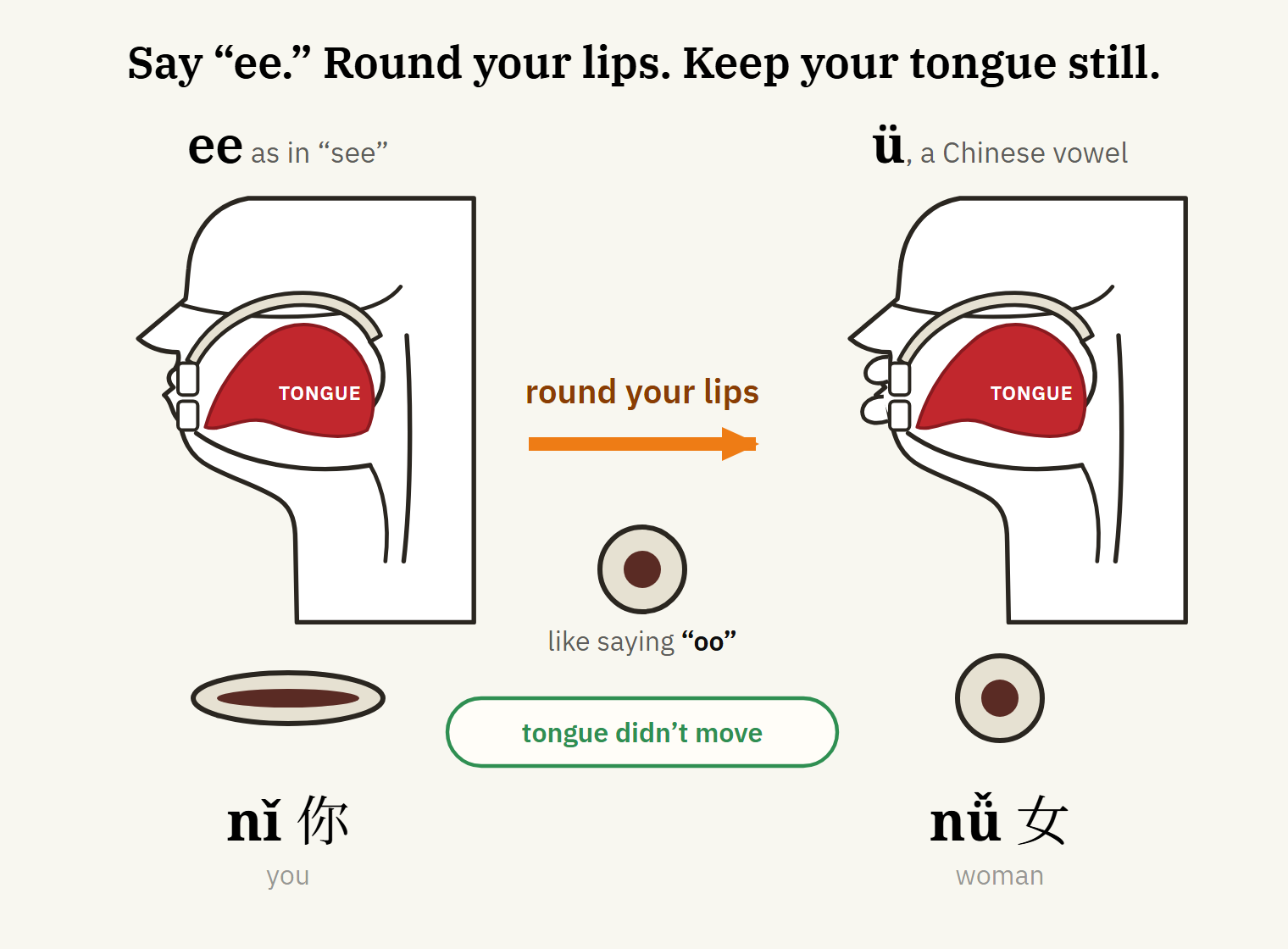
Now let’s take a separate look at the unusual sound represented by the letter ü. It barely exists in Russian or English, and the brain honestly tries to substitute something familiar (usually u or i).
Here’s how to pronounce this sound correctly: position your tongue as you would for i, and shape your lips as you would for u.
The tricky part is that we make each of these two movements separately literally hundreds of times a day, but we almost never make them together.
The difficulty isn’t in the individual sounds, but in having to combine them.
A Bonus Tip for Those Who Already Know Some Basic Chinese
You may find it easier to start with the syllable xi, which you already know:
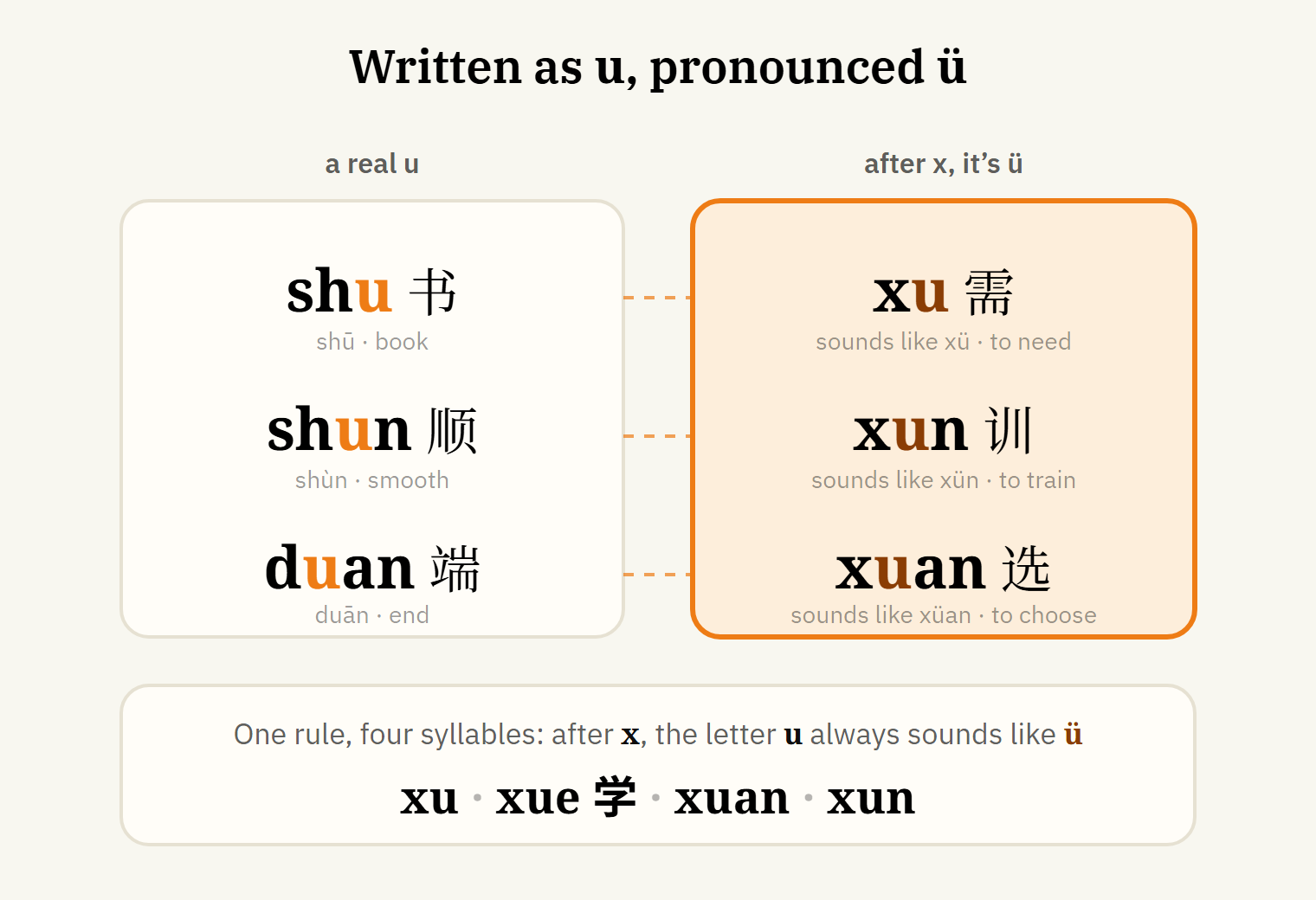
When Do You Pronounce u, and When Do You Pronounce ü?
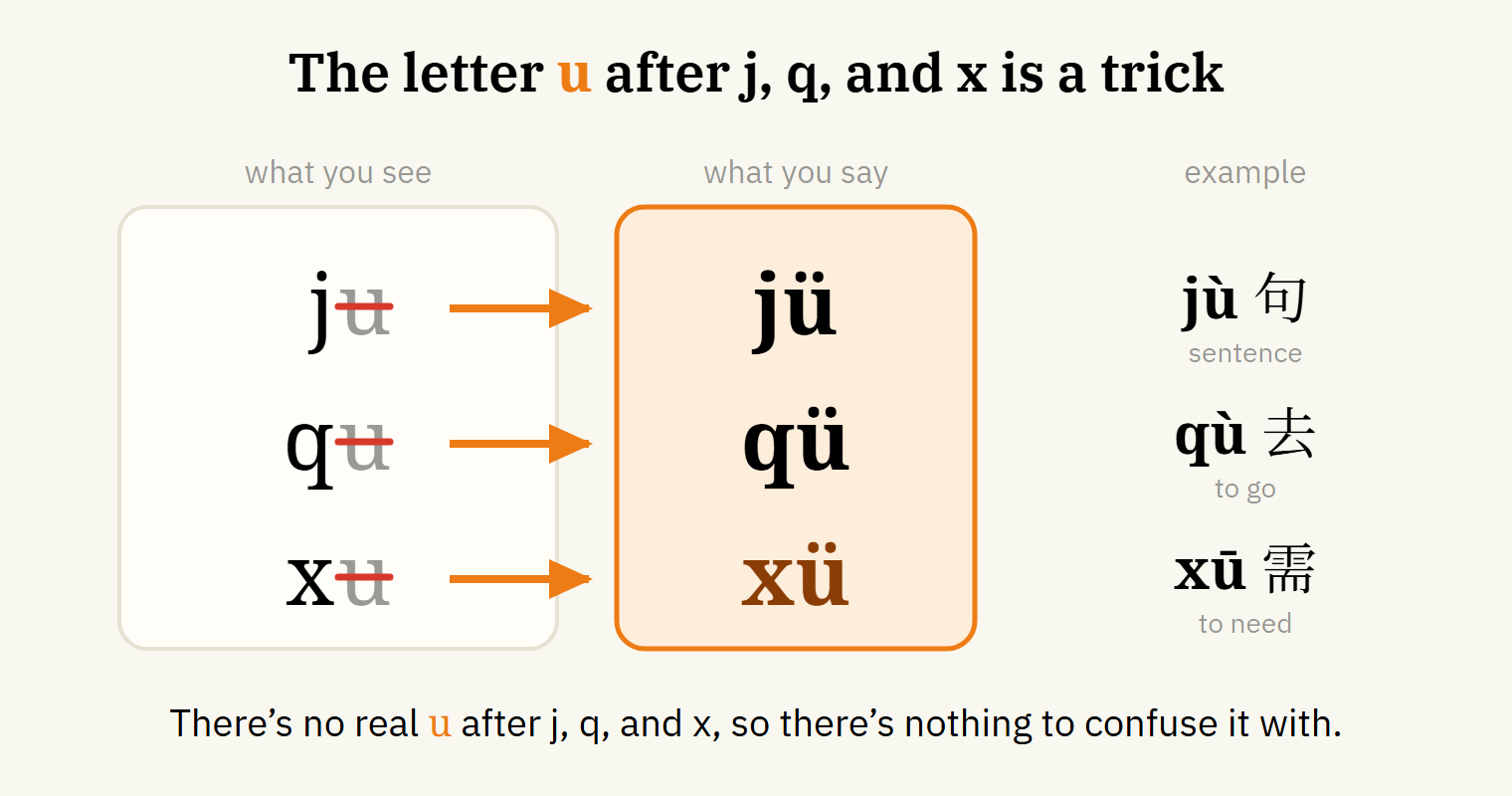
I remember that when I first started learning Chinese, I often made the mistake of saying u instead of ü.
The reason was that I’d let a rule go in one ear and out the other, a rule that explains the logic of pronouncing this sound in a very simple, clear way. Don’t make my mistake. Take a minute to carefully read the information below. It really will save you a lot of time and frustration.
How to Check If You Got It Right
That was the theory. Pictures are fun, of course, but they’re not as much fun as trying out what you know on real words.
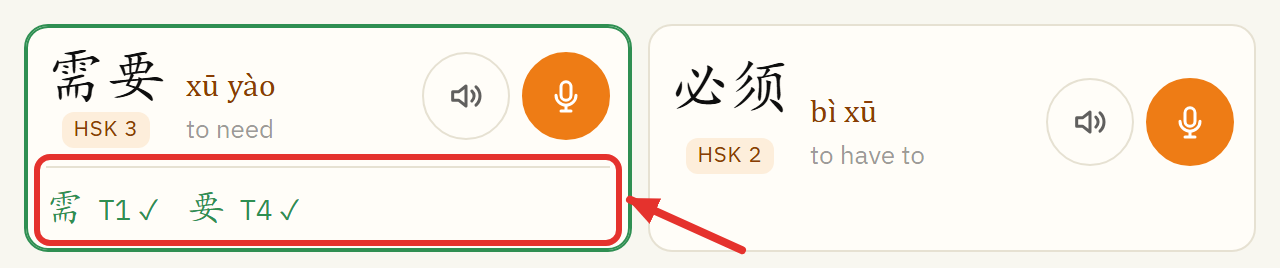
Below, you’ll find a mini widget where you can apply the theory above and practice pronouncing the syllable xu in the most common Chinese words. You’ll be able to listen to the sound, say it yourself, and get feedback from AI. First, read the simple three-step instructions and start practicing.
- Tap the speaker to hear how the word sounds.

- Tap the microphone, say the word, and tap it again.

- Look at the feedback on your pronunciation in the window that appears (T1 means tone 1, and T4 means tone 4).
Try it here
After you finish practicing with the tool above, I recommend checking how your other sounds come out: say five Chinese syllables in our free practice tool and get feedback on each one.