
Mandarin Tone Chart
What Are Tone Pairs?
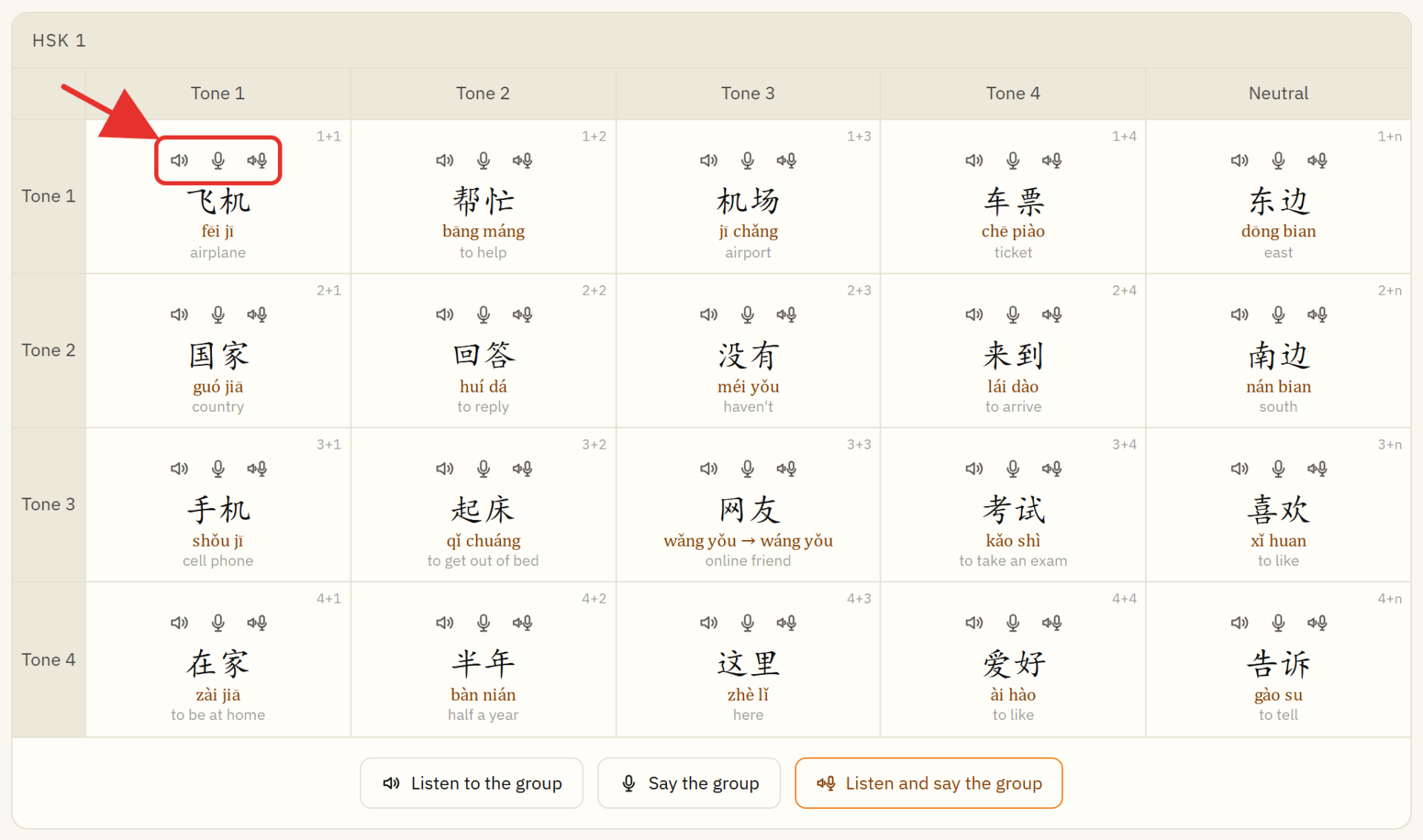
You already know Chinese has four tones. Here’s the part that matters: most Chinese words are two characters long. Take 中文. 中 is first tone, 文 is second tone, so the whole word is a 1+2 pair (tone 1 plus tone 2)
Since most words come in pairs, nailing a tone on a lonely syllable isn’t enough. You need to nail it inside a real two-character word.
How I Practice Chinese Tones and My Tool for Practice
In this article I’ll share the method that worked best for me and my students. Stick to the three principles below, and you’ll hear the difference fast.
The whole method comes down to one simple idea. Every day, do three things:
- Listen to tones. Set aside about 10 minutes to just listen to Chinese words, and right after each one, note which tones you heard. Start at 0.5x speed, move up to 0.75x, and after two or three weeks go to natural speed. Most audio players can slow down playback these days, so use it.
- Repeat tones and record yourself. Turn on your phone’s voice recorder, grab some singe syllables (with pinyin if you like), and read them slowly and loudly, hitting each tone clearly. Then play it back and compare it with the original. The core method is working through about 20 tone pairs (1+1, 1+2, … 4+4). Try to get through the full cycle every session.
- Review the feedback. Judging your own pronunciation is hard. Back when I was learning, I’d ask a Chinese friend to check me and tell me what was off. No native speaker around? Don’t worry. That’s exactly why I built the free tone practice tool with detailed feedback. More on it below.
Your first step takes under a minute:
- Open the pronunciation tool
- Turn on your microphone and say the syllable ma in different tones
- Get detailed feedback on your Chinese tones
What Does the Method Look Like in Practice?
- 5-minute warm-up: find a website where a speaker says Chinese words and note the tone you hear (could be in your head or on paper).
- 10-minute main session (a full cycle of 20 pairs): turn on your voice recorder and read Chinese words out loud.
- Honestly, I was too lazy to mess with the voice recorder every time, so I built a free tone pair tool that gives feedback on each word. you can practice right here without leaving the page (it’s the widget at the top). Three simple steps stand between you and detailed feedback on your tones:
- Press and hold the microphone icon next to the word
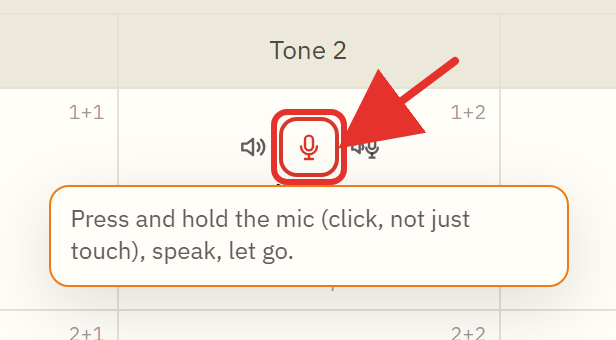
- Say the word out loud
- Let go of the button
5 minutes to go back over the pairs you got wrong. Then, once you’re done, take the time to really read the feedback from the tool. Here’s what the tool’s feedback looks like:

Now I suggest you test what you’ve learned: say five syllables in our free practice tool and see which tones you already pronounce well and which still need work.