
Chinese Tones Practice
3 Tips I’d Give Myself Before Learning Chinese Tones
Tip 1: Don’t believe myths about Chinese tones
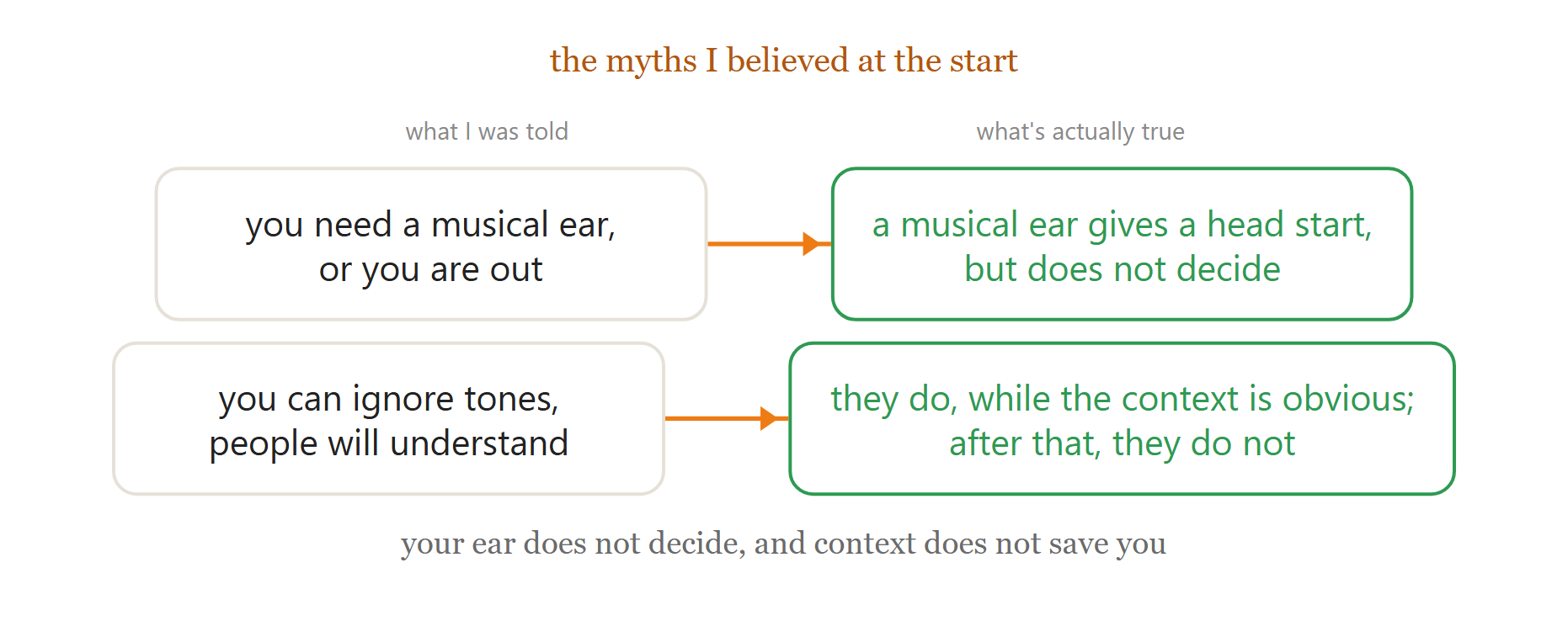
When I went to my first Chinese class in 2012, my classmates immediately told me that we would all be tested for a musical ear.
They secretly told me that there was a piano in the next room where someone would play a note, and anyone who couldn’t match it would be ruled out right away as unable to learn Chinese.
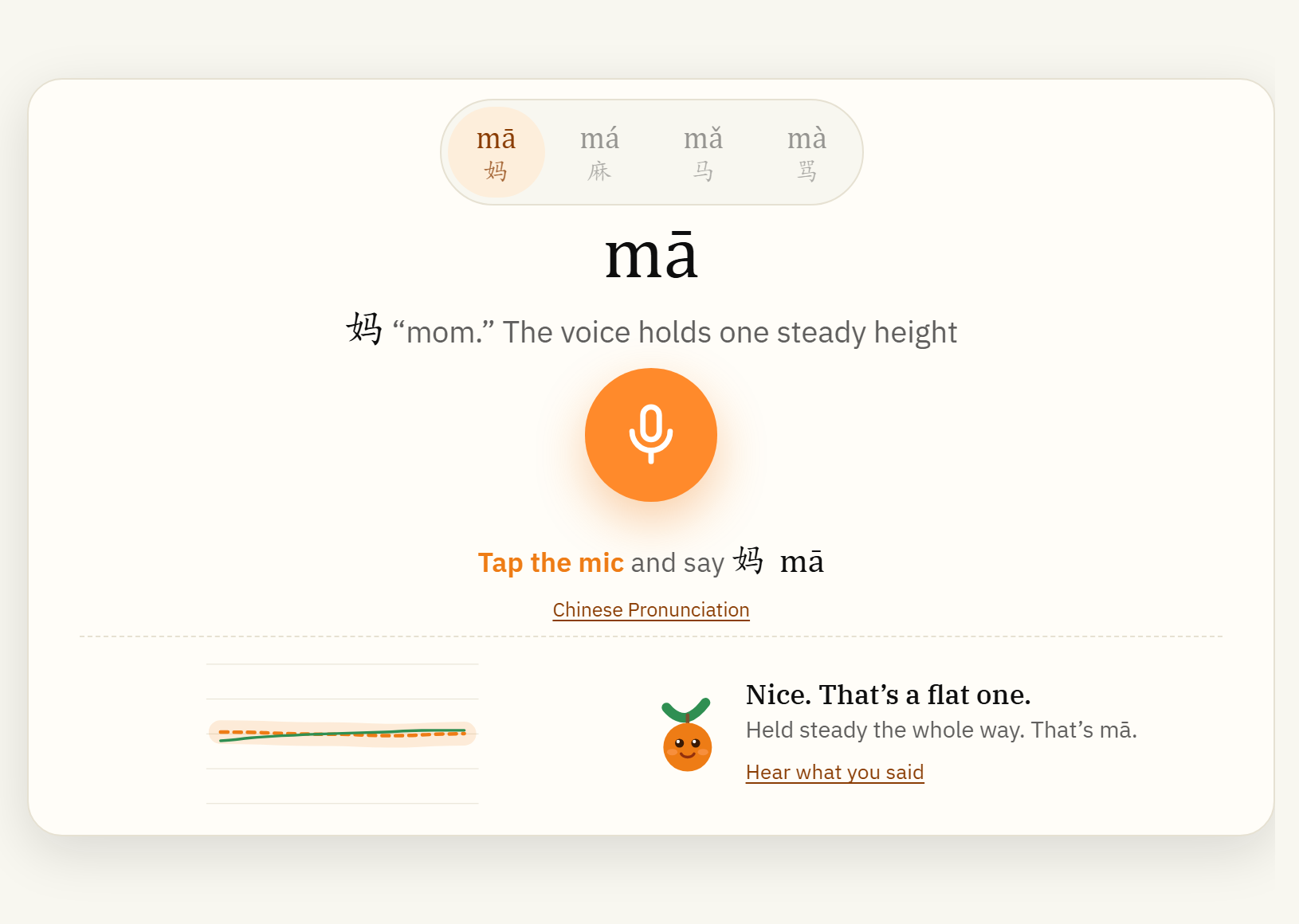
Before you read this article, I‘d really recommend saying mā, má, mǎ, mà into the widget at the top of this page right now. This is how you can get the most out of reading the article.
Looking back, I find it funny. But back then, I was scared as hell because I’ve been tone-deaf since childhood.
There are so many myths about Chinese tones. For example, I also heard that you could just ignore tones. At first, I even believed that, and for a while, it actually worked with simple words.
The main problem was that as long as I used simple sentences and both people knew the context, I was easy to understand.
Once you start having slightly more meaningful conversations without a clear context, getting by on gestures and acting becomes impossible.
That’s exactly why it’s so important to spend time practicing Chinese tones.
Tip 2: Don’t trust your ears, record your voice
Honestly, the main thing I did was stop trusting my own ears. As long as a syllable is in my head, it sounds perfect.
As soon as I recorded myself on my phone and compared it with a reference recording, my little fantasy world fell apart. The tones sounded wrong.
At first, listening to myself was honestly unpleasant, but nothing helped me improve my tones more than recording my own voice.
Here’s how I did it:
- Pick five words you already say every day.
- Record yourself.
- Listen to the recording and compare it with a reference recording.
Tip 3: Find a way to get regular feedback ASAP
When I first started learning Chinese pronunciation, I didn’t have any Chinese friends or a tool that could give me feedback on my pronunciation.
Back then, I just recorded my voice and listened to it, comparing it with a native speaker’s pronunciation. Looking back now, I realize that this method isn’t as effective as getting detailed feedback.
That raises a question: how exactly do you practice tones now? You need feedback on tones, and that’s the main difficulty.
Not everyone has an opportunity to get feedback from native speakers, so I decided to make a free Mandarin tones practice tool.
- One thing I want to point out: tone practice is free and unlimited
- Unlike my sound check tool which has a daily limit of use, you can practice tones every day without limits.
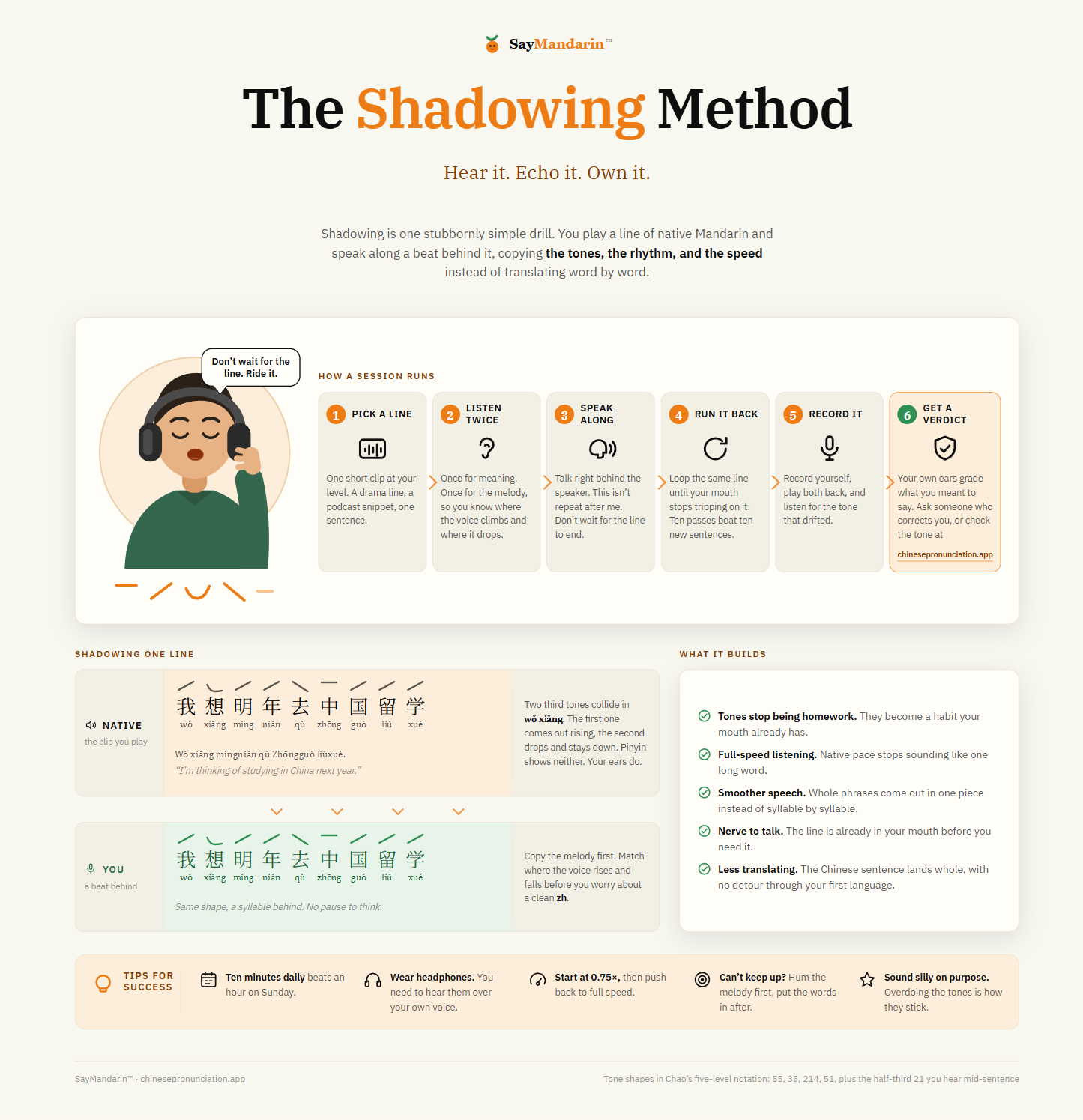
Bonus tip: Use shadowing, but only after a month of learning Chinese tones
Shadowing only works once your ear has learned to recognize Chinese tones in individual words. At the beginning, you can do yourself a disservice and learn to copy the speed, rhythm, and overall melody of a sentence while getting the tones wrong.
And finally, about that piano in the next room.
If I could go back to 2012 and tell myself one thing before my first class, I’d say this: an ear for music is helpful, but it isn’t critical to success in Chinese. It gives you a head start, but it doesn’t determine if you can learn Chinese.
What I didn’t have back then was a way to see my own tone. I had to listen for the difference between what I meant and what I actually said.
You have that option, and it’s the one thing I’d want to give the 2012 version of myself.
Try the free practice tool now. Say ma in all 4 tones and see what your actual tone contour looks like.