
My Name Is in Chinese
Wǒ jiào, wǒ xìng and saying your own name
The most natural way to introduce yourself in Mandarin is 我叫… (wǒ jiào…), “I’m called…”. Add your name after it and you’ve introduced yourself.
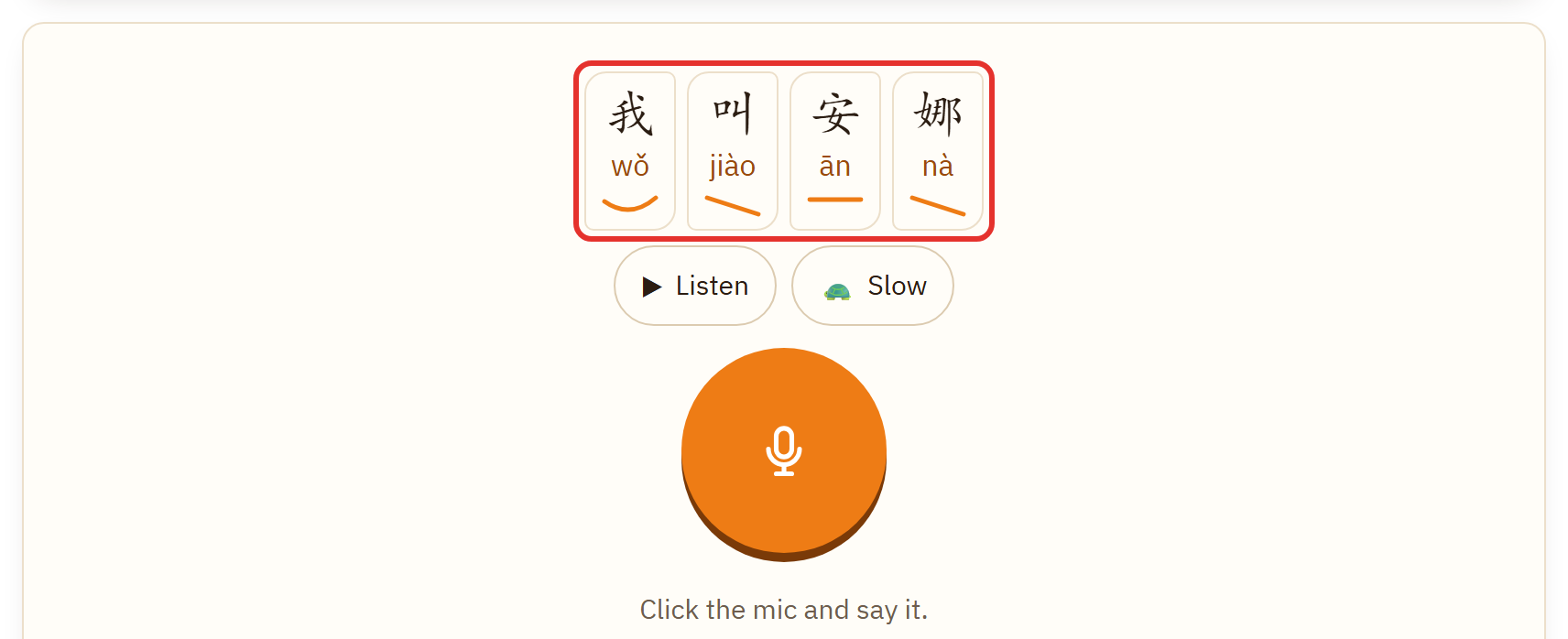
The box starts with 我叫. Add your name in Chinese characters, like 我叫安娜 (no Chinese name yet? see below). To use pinyin instead, replace everything with pinyin and tone numbers: wo3 jiao4 an1 na4. The box doesn’t mix characters and pinyin.
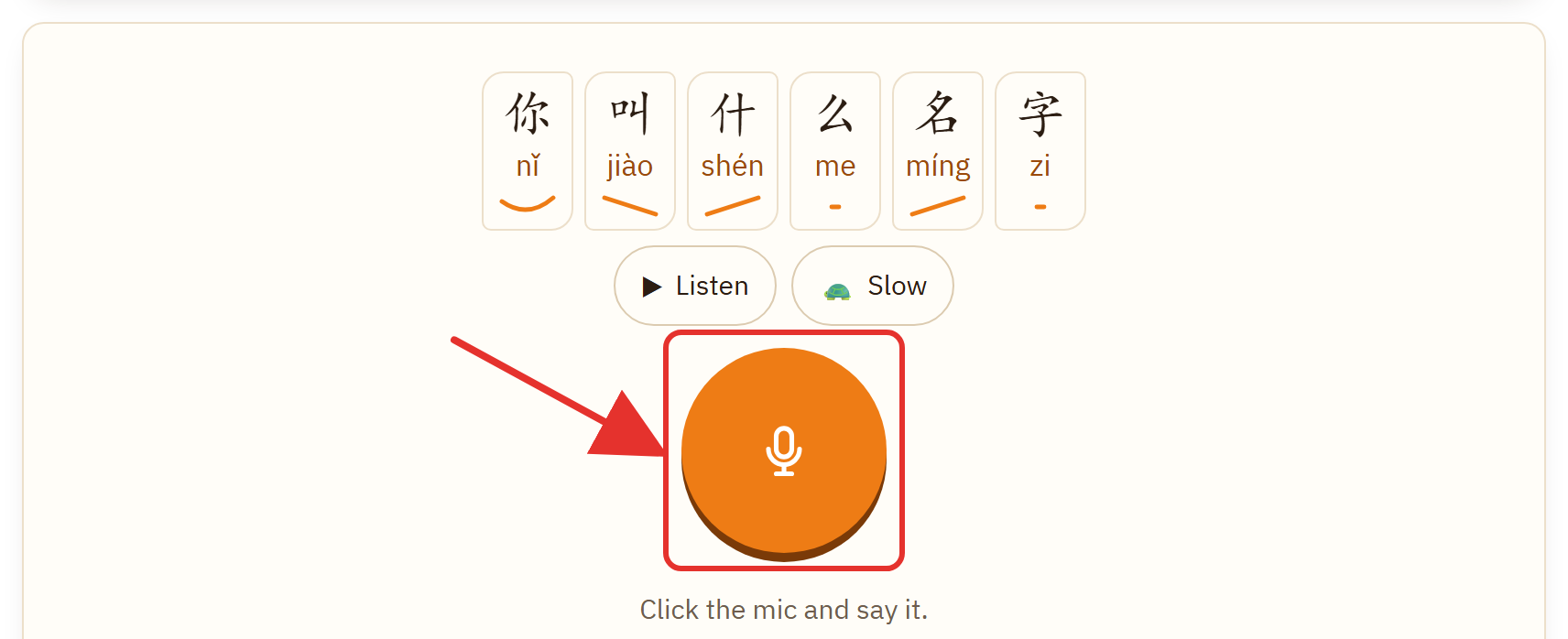
Tap ▶ to hear it, then tap the microphone, say it, and tap again to stop. You’ll see a result for each syllable and tone. The box holds up to 10 syllables, plenty for a name.
Three ways to say my name is in Chinese
- 我叫… (wǒ jiào…), “I’m called…”, is the one people use most.
- 我的名字是… (wǒ de míngzi shì…), “my name is…”, is correct but sounds like a textbook.
- 我姓… (wǒ xìng…), “my family name is…”, is common in polite or work settings. For example, 我姓王 (wǒ xìng Wáng) means “my family name is Wang.”
You can combine them: first 我姓王 (wǒ xìng Wáng), then 我叫王丽 (wǒ jiào Wáng Lì), “my family name is Wang, I’m Wang Li.”
For a quick introduction, you can also say 我是… (wǒ shì…), “I’m…”. To get people to use your first name or a nickname, say 叫我安娜吧 (jiào wǒ Ānnà ba), “just call me Anna.”
How to ask someone’s name
- 你叫什么名字 (nǐ jiào shénme míngzi) asks “what’s your name” in a friendly, neutral way.
- 您贵姓 (nín guìxìng) politely asks for someone’s family name. Use it with older people and in business.
The answer to 您贵姓 starts with 我姓 and the family name.
How to pronounce wǒ jiào, compared with English
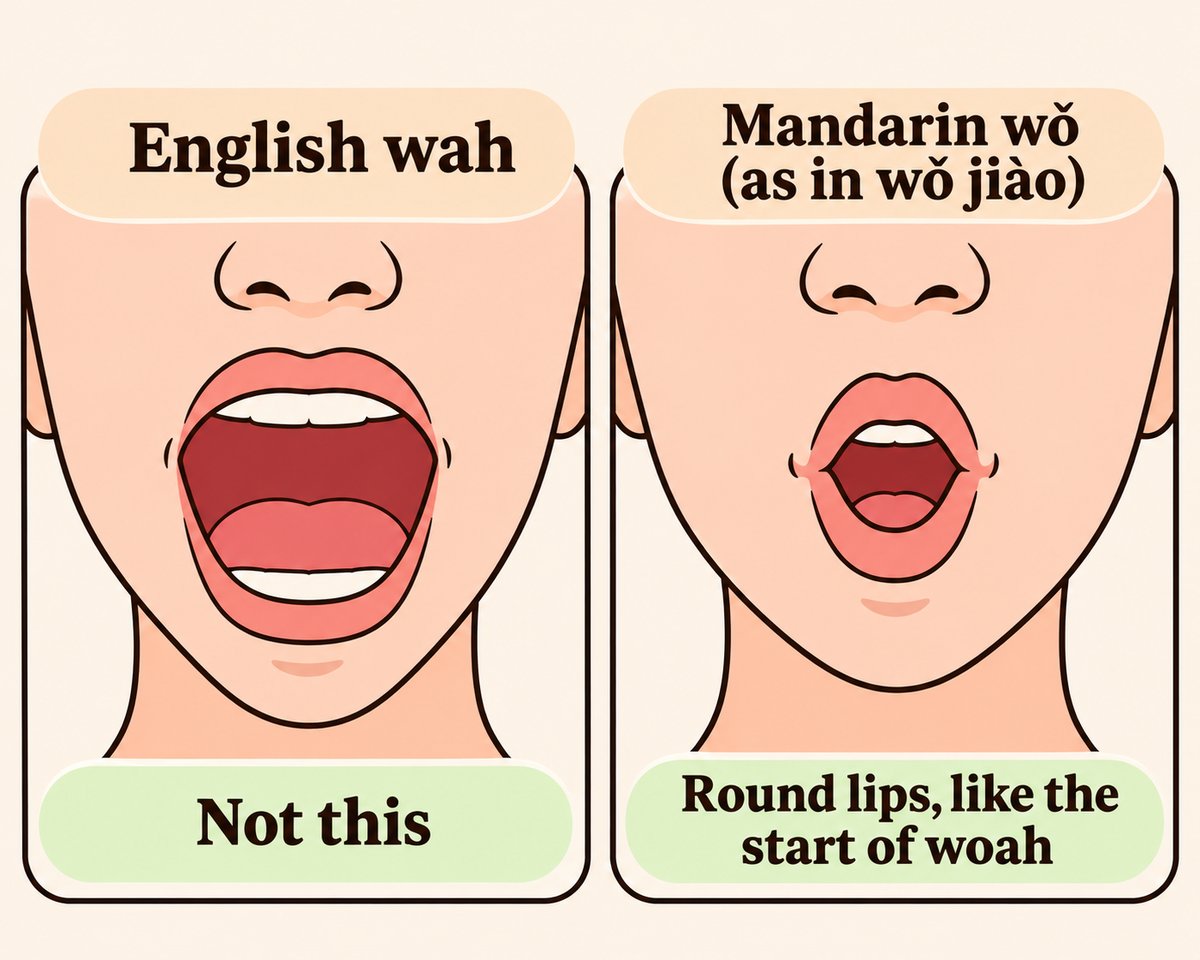
- Wǒ is like the start of “woah,” cut short. It has the third tone, but before a fourth tone it stays low and doesn’t rise.
- J is like the j in “jeep,” but the tip of your tongue rests behind your lower front teeth and the middle of the tongue presses up. Keep your lips spread.
- Iao is like “yow” (as in “yowl” without the l), all in one syllable.
- Jiào has the fourth tone, so start high and drop.
Two more words from the question: míngzi and shénme
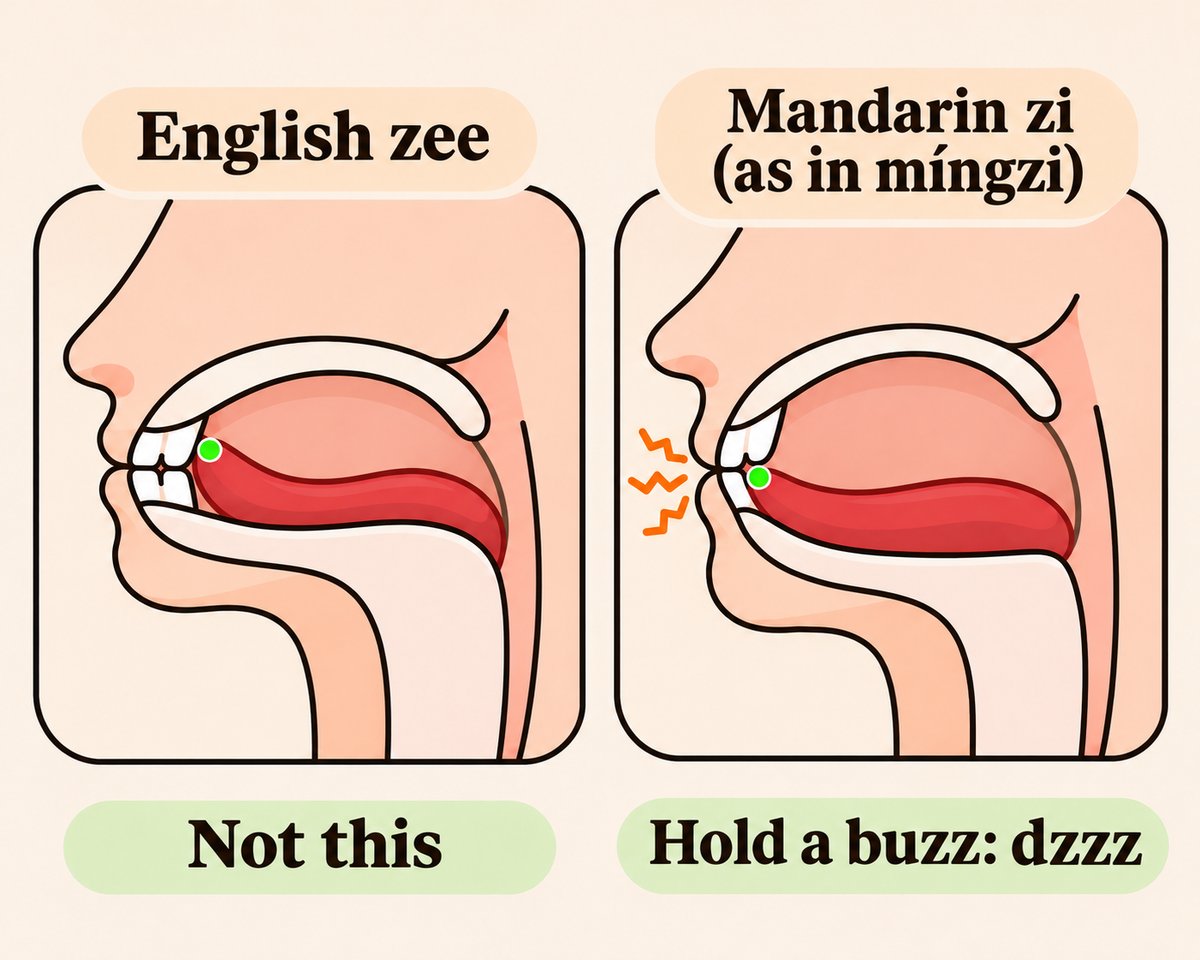
In 名字 (míngzi), zi is not “zee.” Start with the “ds” from “kids,” then instead of “ee” just keep buzzing, dzzz, teeth almost closed.
In 什么 (shénme), sh is like the sh in “shirt.” Say “shirt” and freeze before the vowel: the tip is raised just behind the ridge behind your upper teeth, a bit farther back than for “she.” Don’t curl it back. The e is like the “u” in “huh.” The zh, ch and sh guide explains this group of sounds.
How do I say my name in Chinese?
Many Western names have a standard Chinese version based on sound. Anna is 安娜 (Ānnà), David is 大卫 (Dàwèi), Sarah is 莎拉 (Shālā), and Michael is 迈克尔 (Màikè’ěr).
The other option is a real Chinese name, a family name plus one or two characters with a good meaning, which teachers and Chinese friends often help learners choose.
Either way, learn the tones of your name, because people may not recognize it if the tones are wrong.
Common mistakes English speakers make
- Before jiào, wǒ stays low. A full dip and rise makes the phrase sound slow.
- English stress carries over into names, so “AN-na” comes out with one heavy syllable. In Chinese, Ān and nà each get their own tone.
- 我的名字是 isn’t wrong, but 我叫 sounds more natural in conversation.
Next, learn how to say hello, thank you and goodbye in Chinese.
Check yourself
Introduce yourself out loud
Type 我叫 plus your name and record it three times. If one syllable keeps coming out with the wrong tone, tap 🐢 to hear it slowly and record again.
Then try the question 你叫什么名字 and practice both sides of the conversation.