
How to Say Hello in Chinese
Nǐ hǎo and other everyday greetings
The first word almost everyone learns in Mandarin is 你好 (nǐ hǎo). Literally it means “you good,” and you can use it in most situations. Most beginners also get its tones wrong, because the written tones and the spoken ones don’t match.
The box above already has 你好 in it. Tap ▶ to hear it, or 🐢 to hear it slowly. Then tap the microphone, say it, and tap again to stop. You’ll see a result for every syllable and every tone. You can also type any other greeting from this page, in characters or in pinyin with tone numbers (ni3 hao3).
Six ways to say hello in Chinese
Pick the one that fits the person you’re talking to.
- 你好 (nǐ hǎo) is the all-purpose hello, fine with strangers, shop staff and new classmates.
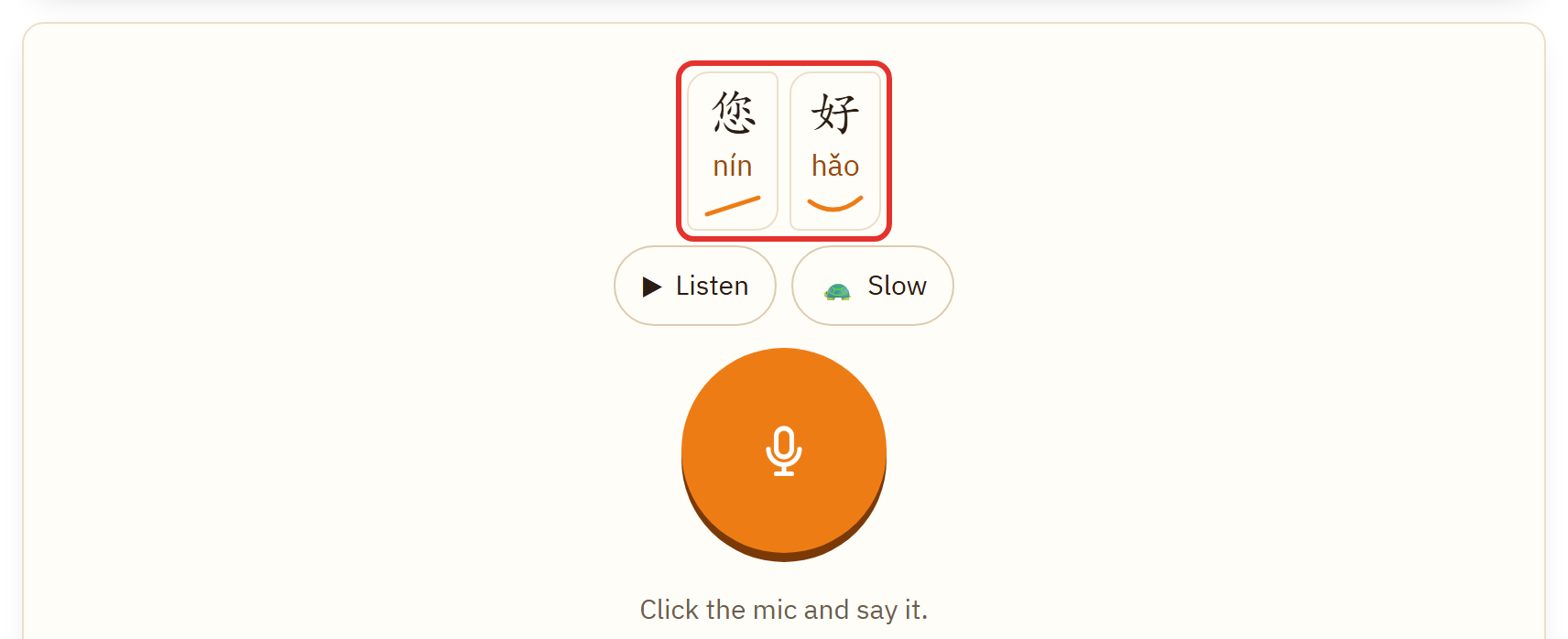
- 您好 (nín hǎo) is the polite version for older people, teachers and customers. 您 is the respectful form of “you.”
- 大家好 (dàjiā hǎo) means hello, everyone. You’ll hear it at the start of a class or a meeting.
- 早 (zǎo) or 早上好 (zǎoshang hǎo) means good morning. Coworkers often say just 早.
- 喂 (wèi) is for answering the phone, not for greeting someone in person. On the phone, most people say it with a rising tone, wéi (the widget checks the dictionary tone, wèi).
- 嗨 (hāi) is a casual “hi” borrowed from English, popular with younger people.
For someone you haven’t seen in a while, say 好久不见 (hǎojiǔ bú jiàn), “long time no see.”
Textbooks also teach 你好吗 (nǐ hǎo ma), “how are you?” It’s correct, but people use it much less than textbooks suggest. A friend is more likely to ask 最近怎么样 (zuìjìn zěnmeyàng), “how have you been lately?”
How to pronounce nǐ hǎo
In the dictionary, both syllables of 你好 have the third tone. When two third tones meet, the first one changes into a rising second tone. So people say ní hǎo, even though pinyin still writes nǐ hǎo.
- Say ní with a rising tone, the way you’d ask a short question: “ní?”
- Start hǎo low and let your voice drop to the bottom of your range.
- Keep hǎo low. At the very end of a sentence you may hear a small rise, but listeners mostly pay attention to the low part.
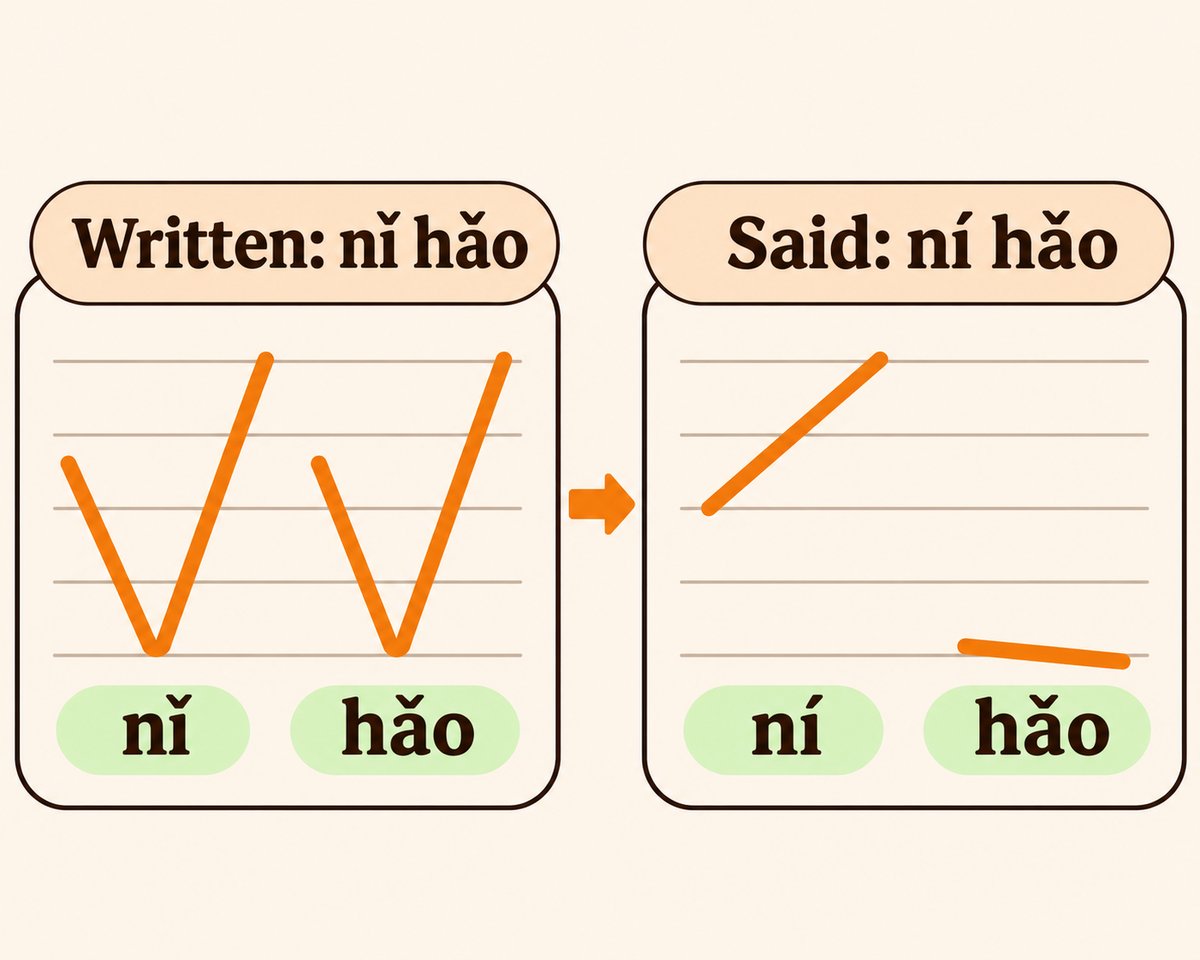
The same rule works for every pair of third tones, so 很好 (hěn hǎo, “very good”) becomes hén hǎo. The Mandarin tone chart lets you play and record every tone pair.
The sounds of nǐ hǎo, compared with English
- N is the same as the n in “no.” Nothing to change.
- I in ní is like the “ee” in “see,” but keep it steady and don’t let it slide at the end. Lips spread, almost a smile.
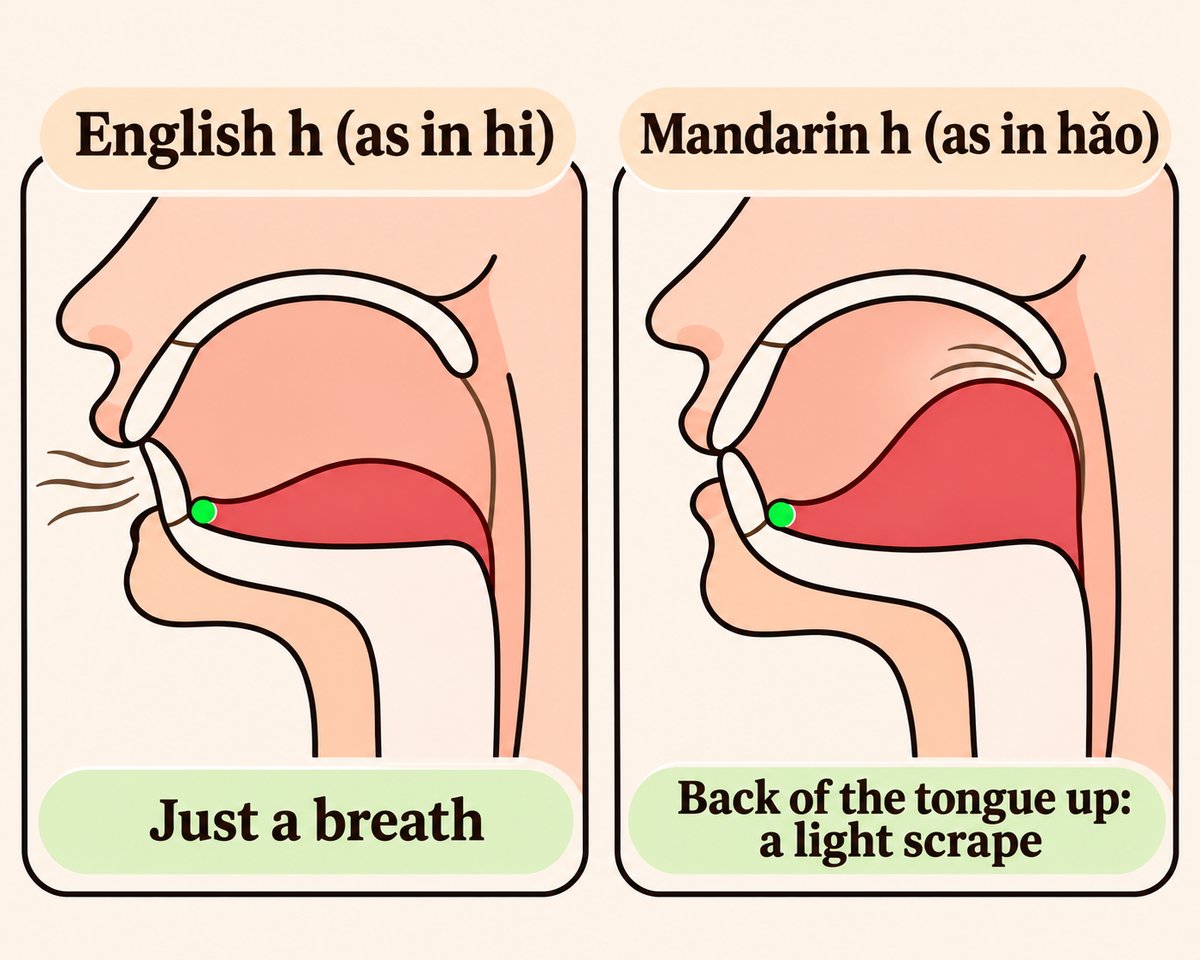
- H is like the h in “hi,” but lift the back of your tongue toward the spot where you make the k in “cool,” so the air scrapes a little. If you only hear a soft breath, lift it a bit more.
- Ao is like the “ow” in “now,” but start from the “ah” in “father,” jaw open. It’s one syllable, so don’t split hǎo into “ha-oh.”
Common mistakes English speakers make
- Saying nǐ hǎo with two full dips sounds slow and bumpy. Go with ní hǎo.
- A plain English h makes hǎo sound breathy. Add the light scrape at the back.
- English speakers often say ni with a falling tone, like a short statement. It should rise.
- In person, 喂 is a blunt way to get someone’s attention, and it can sound rude.
- With close friends, 你好 every time can feel a little stiff. A name, 嗨 or 早 sounds warmer.
Next, learn how to say thank you, goodbye and my name is in Chinese.
Check yourself
Try the polite form
Go back to the widget, replace 你好 with 您好, and record it. Nín rises from the start, and this pair has no tone change.
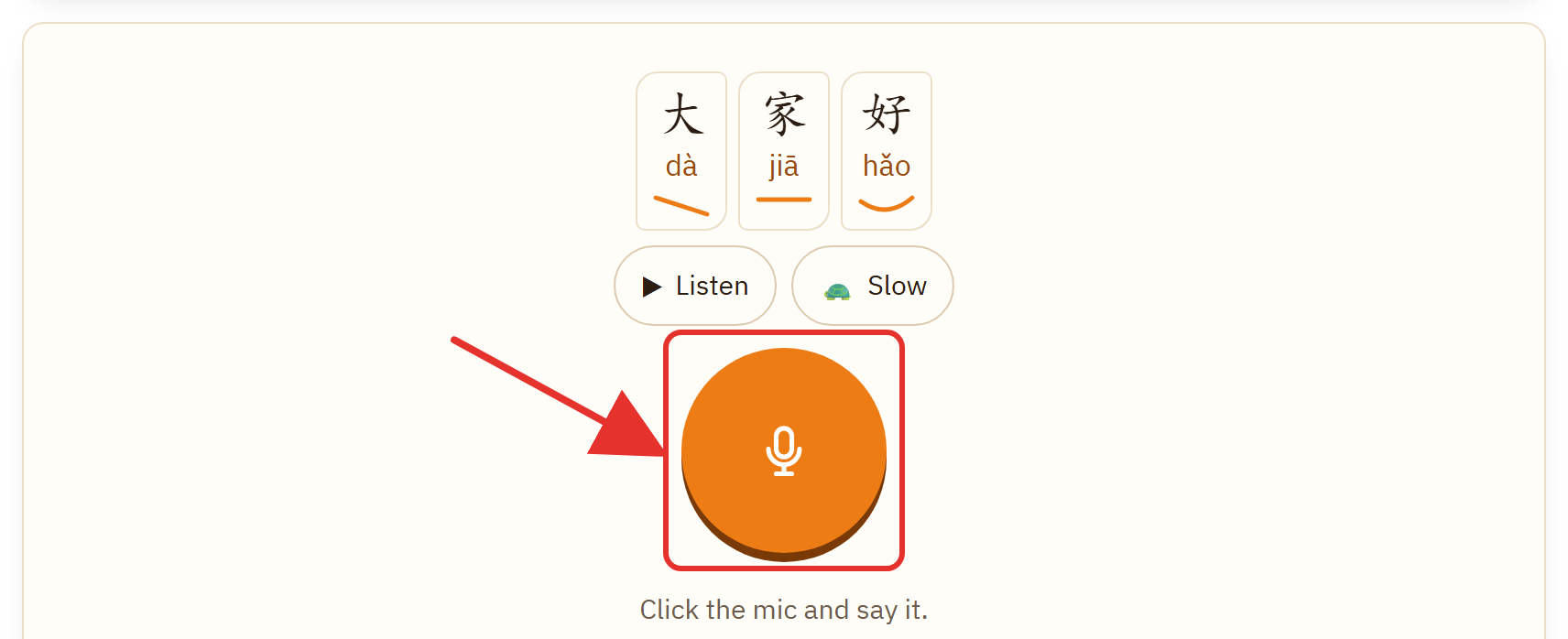
Once both greetings sound clean, try 大家好, which has three syllables with three different tones and is good practice before longer phrases.