
Qin Pronunciation
Qin sounds close to “cheen,” never “kin,” and the ch is made further forward than in English, with your tongue tip down. In 秦 (Qín), the name of China’s first imperial dynasty, your voice rises from the middle to the top, the way it does when you ask “huh?”
The usual slip is an English ch, with the tongue tip up behind your top teeth. Pick a word in the box above, tap the speaker to listen, then record yourself. The widget can show if your q came out closer to ch, and which tone it heard.

Qin or Qing?
These are two different dynasties, more than 1,800 years apart, and they sound different too:
- 秦 (Qín), 221–206 BC: rising tone, ends in a plain n. Its founder unified China and called himself the First Emperor.
- 清 (Qīng), 1644–1912: high and level, ends in ng, as in “sing.” It was China’s last imperial dynasty.
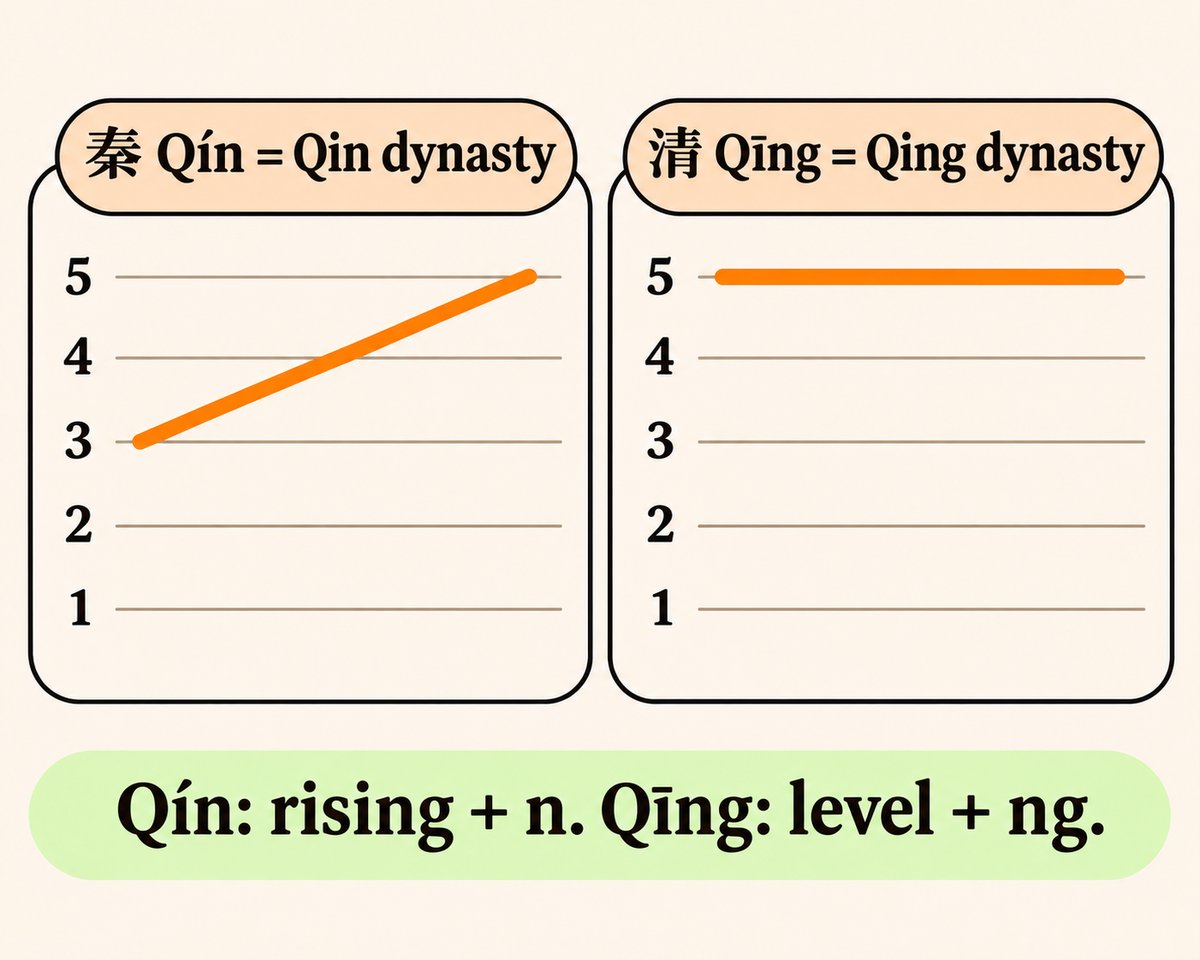
The tone and the ending are two separate differences. For Qín, rise and finish with your tongue tip touching just behind your top teeth. For Qīng, hold one high note and finish with the back of your tongue raised.
Why is it spelled with a q?
Pinyin, the spelling system China adopted in 1958, uses q for this sound. Older books use the Wade–Giles system, which wrote the same name Ch’in. That spelling is one reason many English speakers still say “chin.”
How to say q (and check it with your hand)
Hold your palm a few inches in front of your mouth for this one.
- Rest the tip of your tongue behind your lower front teeth and smile slightly.
- Press the front of your tongue, just behind the tip, against the roof of your mouth behind your gums. Then let it go into a short hiss, like x, with a puff of air. You should feel it on your palm.
- Glide into “een,” as in “seen,” and finish with your tongue tip touching just behind your top teeth for the n.
In the picture, the solid tongue is q. The dashed outline shows the tip going up, the way it does for ch.
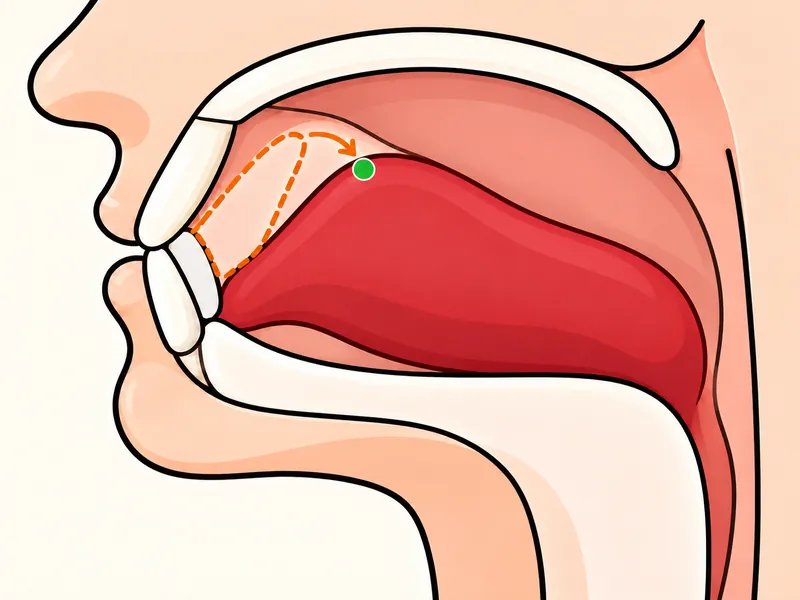
The puff alone won’t fix q, since English ch has one too. The difference is where your tongue is. But no puff on your palm means it probably sounded like j, as in 金 (jīn), “gold.” Q, x and j share the same tongue position, and the xu page walks through all three.
Words to practice
The widget’s list starts with words that have the high, level qīn (亲), which means “close” or “family”:
- 母亲 (mǔqīn), “mother,” and 父亲 (fùqīn), “father.” Both are formal; at home people say 妈妈 (māma) and 爸爸 (bàba), and in quick speech the qin in these two often goes light.
- 亲爱 (qīn’ài), “dear”
- 钢琴 (gāngqín), “piano,” for the rising qín
To compare all four tones, the tone chart plays them in pairs.
Next, try xia, which starts with the soft x, or huang, a common name with a tricky h. All syllable guides are on the pronunciation guides page.