
Xia Pronunciation
Xia sounds close to “shyah,” said as one syllable. If you saw it as the Linux Mint 22.1 release or as someone’s name, the Mandarin reading is the same. As the family name 夏 (Xià), your voice falls from high to low.
Say it as “shah,” without the y, and a listener may hear sha, a different syllable. Pick a word in the box above, tap the speaker to listen, then record yourself. The widget can show whether your x drifted toward sh, and which tone you used.

How to say xia in one beat
“Shyah” gets you close, but pinyin x isn’t quite an English sh. The difference comes from the middle of your tongue. The “ia” after it is one quick glide, like the “ya” in “yacht.”
- Smile a little and rest the tip of your tongue behind your lower front teeth.
- Raise the middle of your tongue toward the roof of your mouth and let air hiss over it. That soft hiss is x.
- Slide straight into “ya” and open your mouth. Xia is one beat, not “see” plus “ah.”
In the picture below, the solid tongue is x. The dashed outline shows the tip going up, which is what turns x into sh.
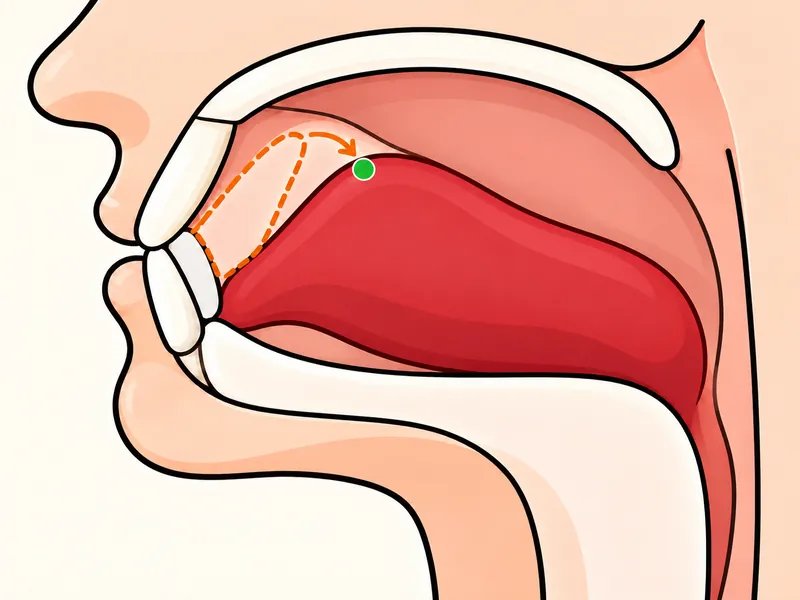
Between s and sh
If your x keeps coming out as sh, check your lips first. English sh rounds them forward, and in xia, x keeps them in a slight smile. If it sounds more like s, raise the middle of your tongue higher toward the roof of your mouth, with the tip still down. In the next picture, the dashed outline is the s shape.
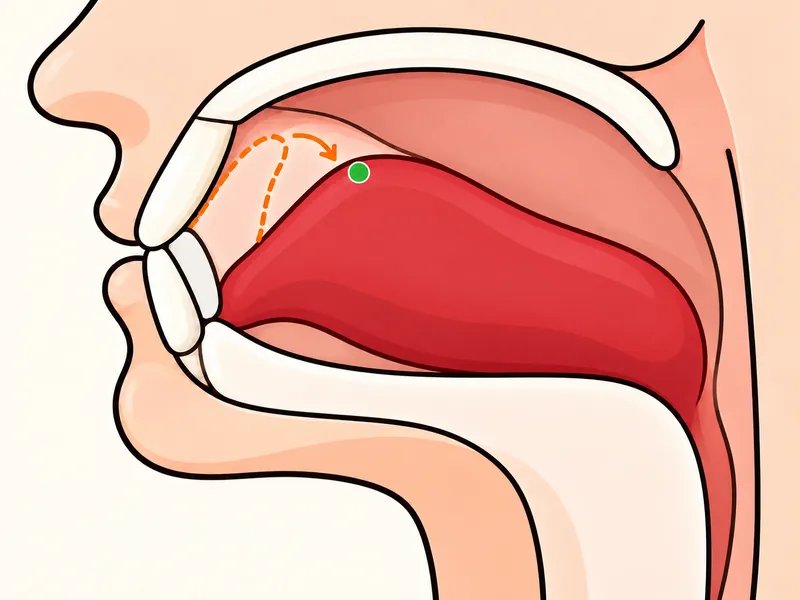
The xu page drills the same x on a different vowel, and the zh, ch and sh guide puts x and sh side by side.
Shrimp or down: the tone decides
The sounds stay the same, and the tone changes the word:
- 虾 (xiā), high and level: “shrimp”
- 侠 (xiá), rising: a hero in martial arts stories, mostly in words like 武侠 (wǔxiá), the martial arts genre
- 下 (xià), falling: “down,” “below,” “next”
- 夏 (xià), falling: “summer”
All ten words in the widget above use the falling xià. Start high and drop, the way you’d say a firm “no.” If your voice stays high and level, it can sound like 虾, “shrimp.”
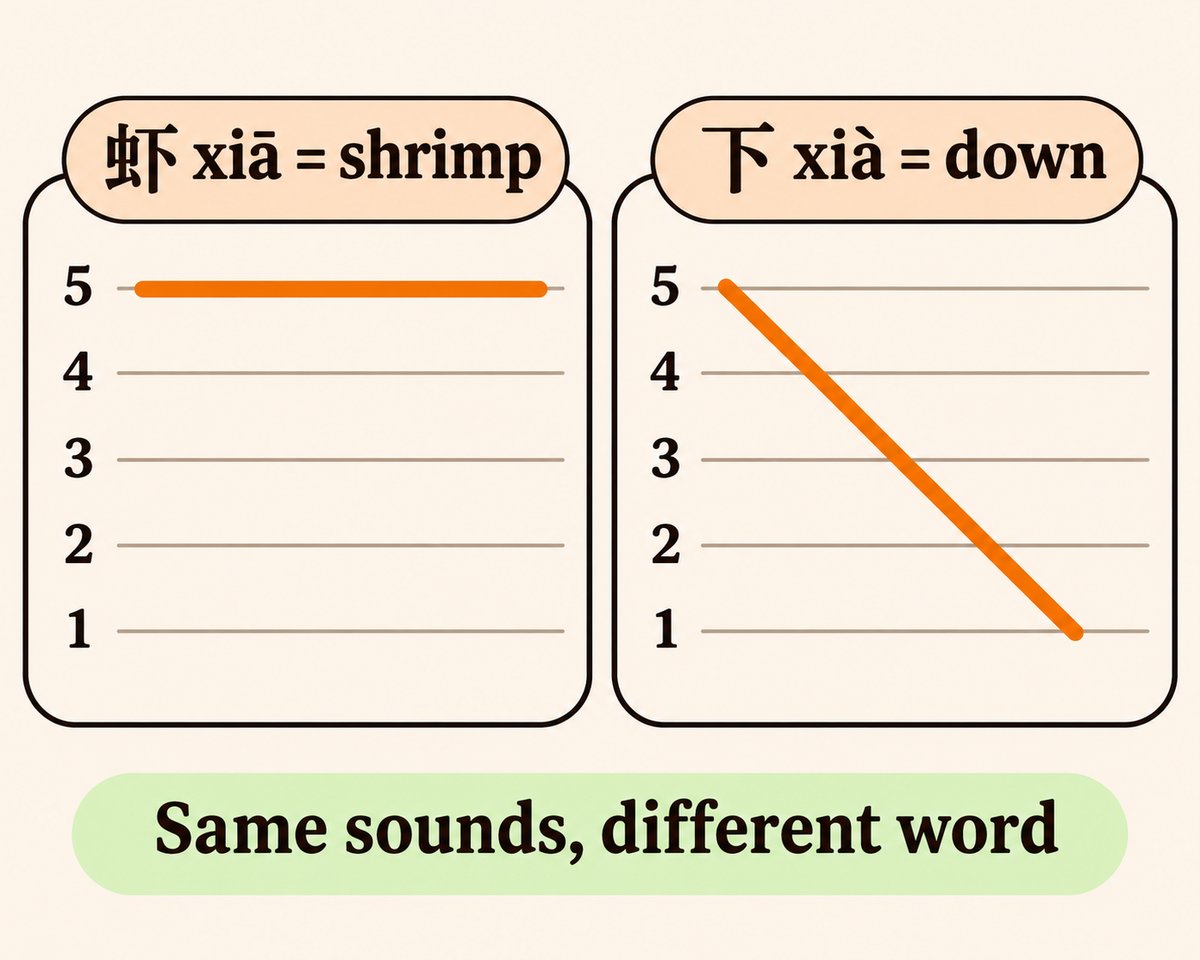
To hear all four tones next to each other, open the tone chart, which plays them in pairs.
Ten words to say out loud
The widget lists ten common words with xia, sorted by how often people use them. A good order to try them:
- 下午 (xiàwǔ), “afternoon,” a falling xia followed by a low wu. You’ll need it whenever you make plans for later in the day.
- 下来 (xiàlai), “to come down.” The second syllable is light and short.
- 以下 (yǐxià), “below” or “the following”: xia comes second.
Record each one. When the widget hears a different tone or sound, it tells you what it heard. Fix that one thing and record again.
Xia as a family name
夏 (Xià), the same character as “summer,” is also a Chinese family name. It’s the name of the Xia dynasty too, the first dynasty in traditional Chinese histories. Either way, the tone falls.
More syllables that trip up English speakers: qin, where q isn’t ch, and huang, with an h that English doesn’t have. The full list is on the pronunciation guides page.