
HSKK
How to prepare for the HSKK: tips from someone who took it
The HSKK is an official exam that tests your spoken Chinese. The main difference between the HSKK and the regular HSK is that it tests how well you can understand spoken Chinese and speak it on your own. The main reason to take the HSKK is to get into Chinese universities and get scholarships.
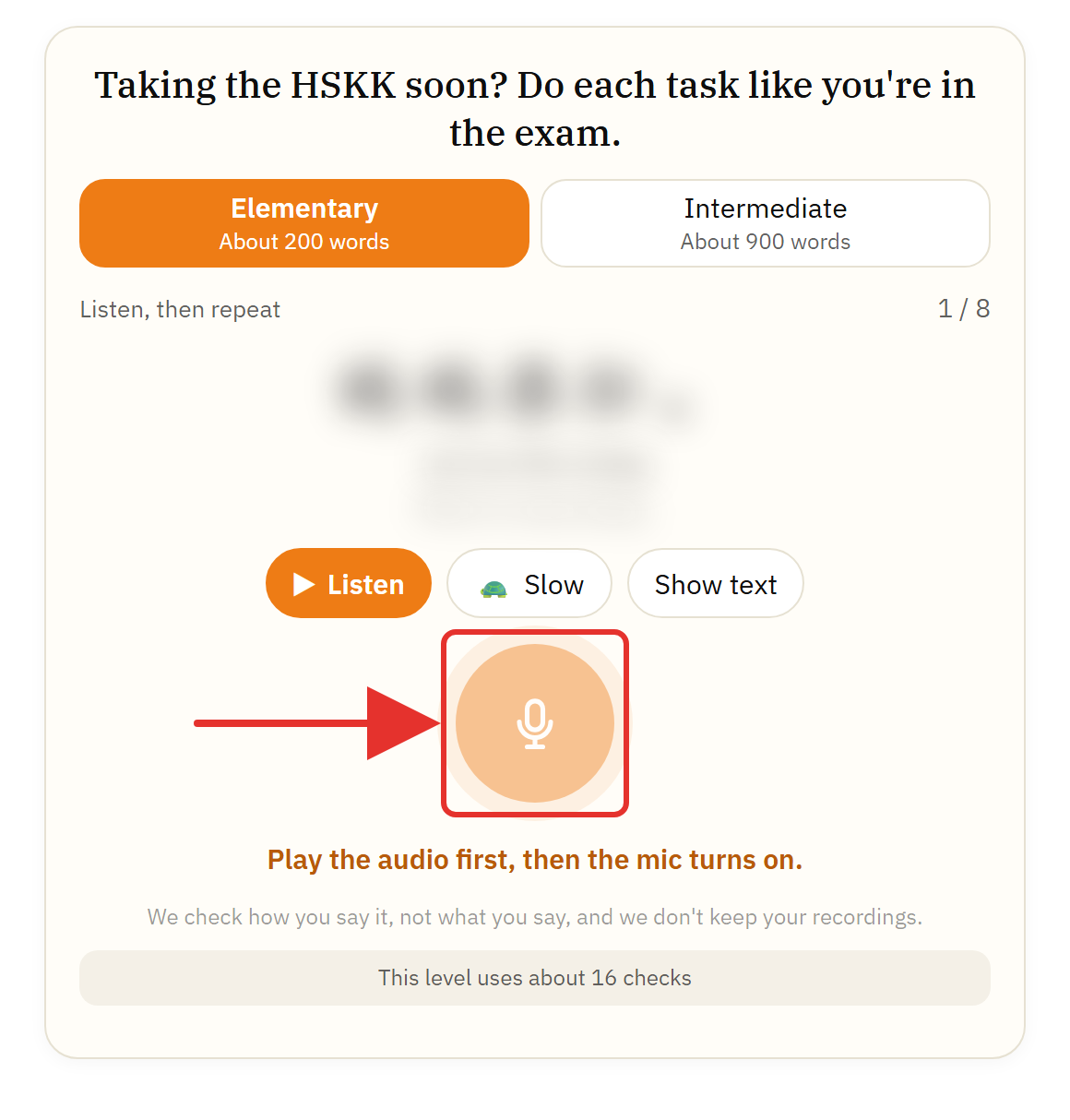
If you’re on this page, you probably already know why you need this exam.
The HSKK checks whether you can repeat phrases back quickly and exactly, put together your answers, and speak clearly enough for a native speaker to understand you.
That’s why pronunciation exercises, recording your own voice, and answering questions against the clock are especially useful when preparing for this exam.
On this page, you’ll find tools that I think will help you prepare more effectively for the exam and improve your chances of passing it.
I took the HSKK in 2015, and the HSK around the same time.
Back then, preparing was really hard because there were no interactive tools on websites or in apps to practice with. I had to bother my Chinese friends to drill me on different exam questions.
Overall, I remember doing well, and after a preparatory year I was able to go straight into the second year at Beijing Language and Culture University.
How the exam works
The exam has several levels.
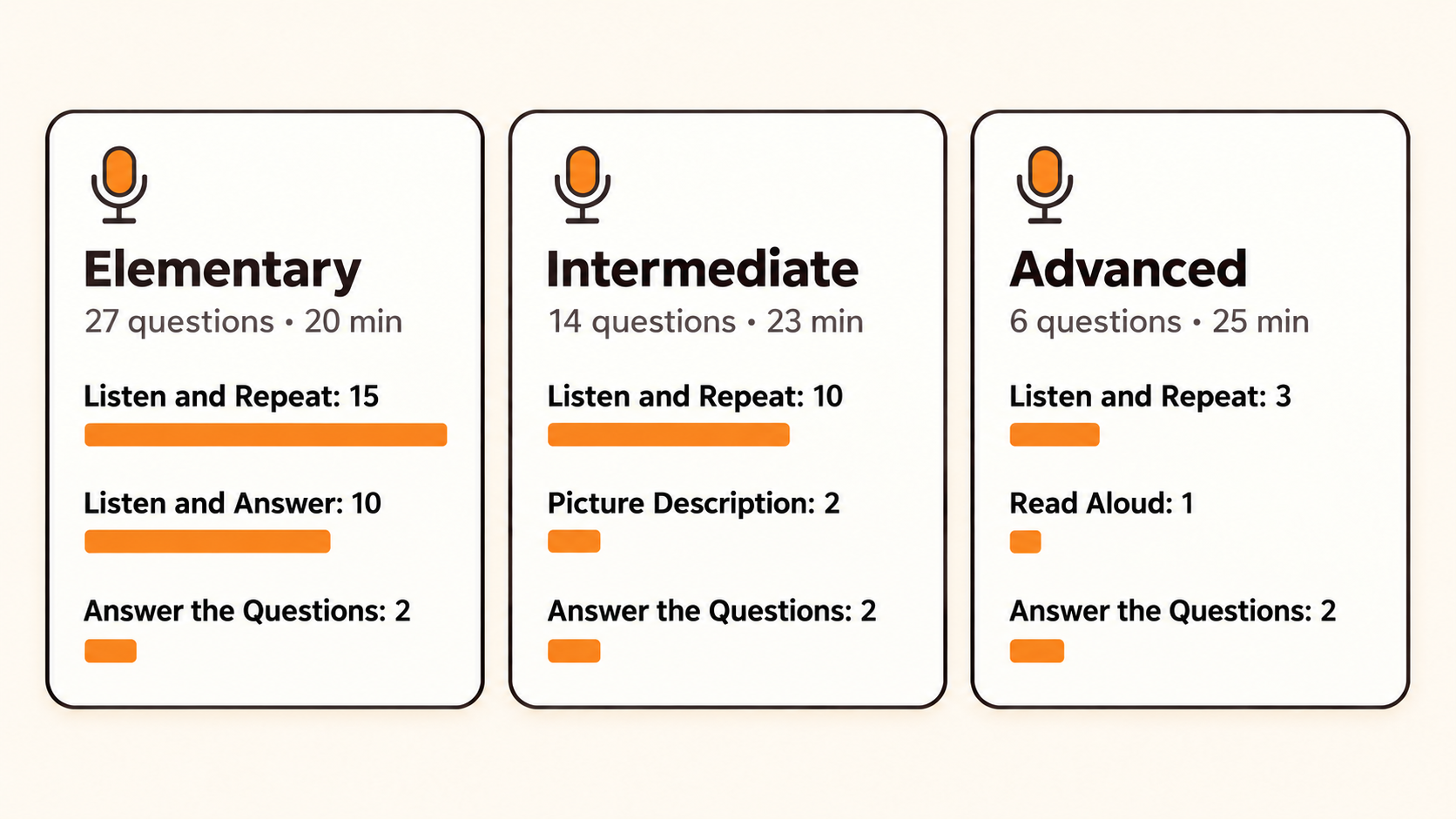
- The Elementary level. This is for when you’ve been studying Chinese for about 1–2 semesters and know about 200 words. This level has 27 tasks.
- Then there’s Intermediate. This is for someone who’s been studying Chinese for 1–2 years and knows about 900 words. This is the level I took to get into a Chinese university.
- And there’s Advanced. This one is for 3,000 words, and the official recommendation is usually for people who’ve been studying Chinese for more than 2 years. It’s the hardest level of the exam. Not many people get that far, and it’s actually not required very often.
| Level | Tasks | Time | Exam Sections |
|---|---|---|---|
| Elementary | 27 | 20 minutes, including 7 for preparation | Listen and Repeat: 15 · Listen and Answer: 10 · Answer the Questions: 2 |
| Intermediate | 14 | 23 minutes, including 10 for preparation | Listen and Repeat: 10 · Picture Description: 2 · Answer the Questions: 2 |
| Advanced | 6 | 25 minutes, including 10 for preparation | Listen and Repeat: 3 · Read Aloud: 1 · Answer the Questions: 2 |
Source: https://www.chinesetest.cn/HSKK/1
What the exercise checks
On this page, you can practice pronunciation and tones specifically. These often cause problems, since the examiner might misunderstand you or come away with a very poor impression of you because they have to strain to follow what you’re saying.
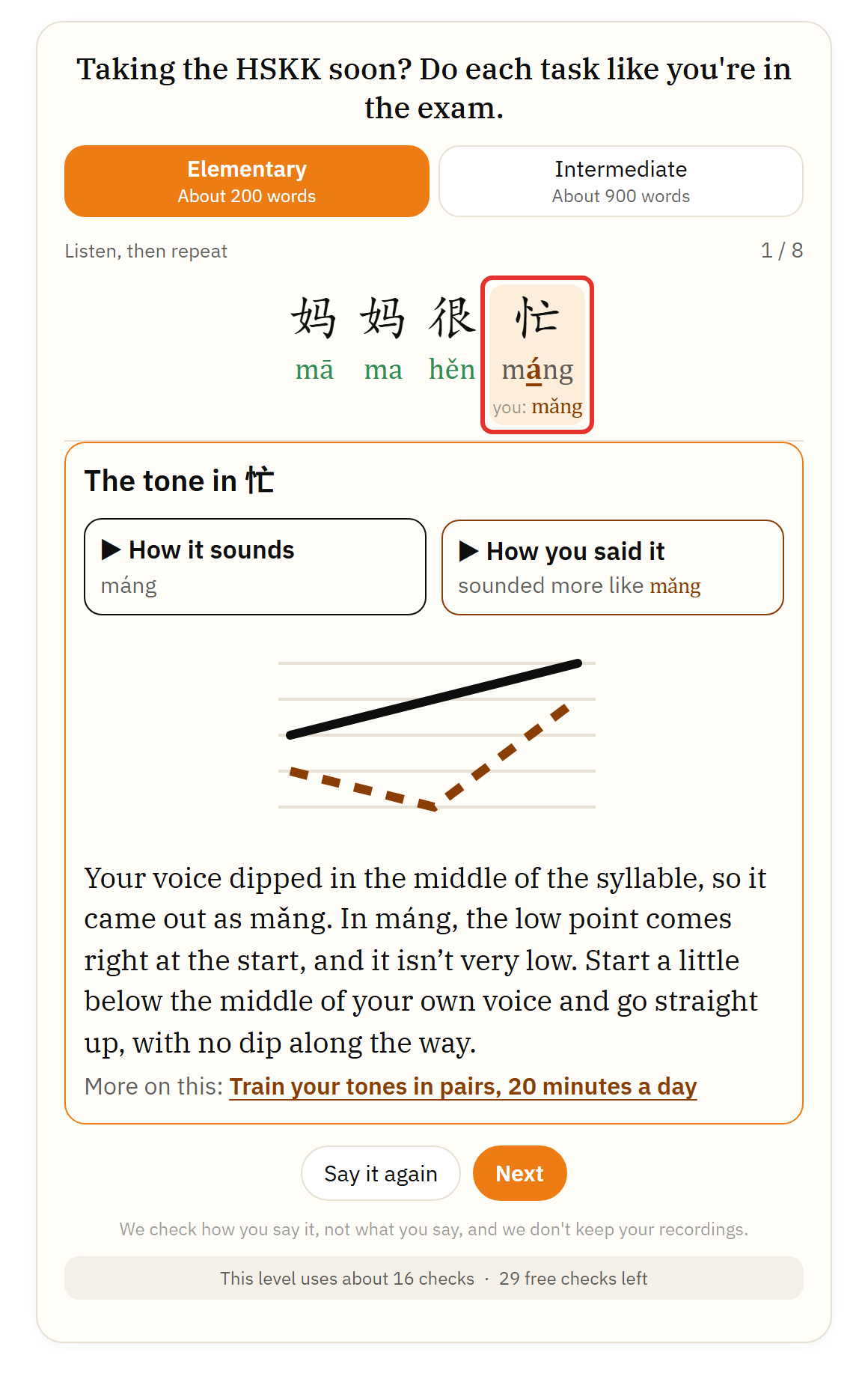
In my experience, fairly good pronunciation and tones are like a ticket in: people immediately see you as someone who has put in the effort. The tool on this page checks how you read a text you’re given, but it doesn’t check spontaneous speech. That feature is in development.
How to prepare
Here’s what I recommend.
- I’d start preparing gradually 2–3 months before the exam, specifically for the speaking part.
- Start by assessing your current level and checking which sounds and tones you get wrong most often. You can do that with this practice tool.
- Once you know what you need to work on, I recommend practicing for at least 10–15 minutes a day. Read sentences aloud, carefully write down your mistakes, and then work on those specific mistakes separately. You can find reading practice here.
- There’s another important point: if you don’t understand a question, I recommend not dwelling on it. Just skip it so you don’t get stuck. In my experience, this works much better.
- In my view, recording your voice and getting feedback can really help you pass the HSKK. In any foreign language, people form their first impression of you from your pronunciation, the melody and rhythm of your speech, and whether you hit the tones or miss them.
Frequently asked questions
What score do you need to pass the HSKK?
The maximum score is 100, and you pass with 60 or higher. The same rule applies to all three levels.
How long is an HSKK score valid?
Officially, 2 years from the exam date. If you need the certificate for university admission or a job, check the date: an old score may not be accepted.
Which HSKK level should I choose?
Look at your vocabulary: Elementary is designed for about 200 words, Intermediate for 900, and Advanced for 3,000. Your university or employer decides which level you need, so check with them. I took Intermediate when I was applying to a Chinese university.